
About
The material has a history. So do we.
Contour Biomass is the biomass arm of Contour Enviro Group — an integrated environmental group delivering restoration, accredited training and green technology across the Western Cape.
Why we exist
The wood was always going to come down
Contour Enviro Group has been clearing invasive alien vegetation across the Western Cape for years — catchments, reserves, farms and river corridors. On most of those sites, the material was stacked and burned, because moving it cost more than it earned.
That is the standard outcome nationally. Invasive plants could supply an estimated 11.3 million tonnes of solid biomass a year in South Africa, and most of it is left where it fell because the logistics do not pay.
Contour Biomass exists to change that arithmetic. Where recovery is commercially viable, biomass revenue helps cover its cost, the fuel load leaves the slope, and the clearing programme goes further on the same budget. The environmental case and the commercial case point in the same direction, which is rare enough to be worth building a business on.
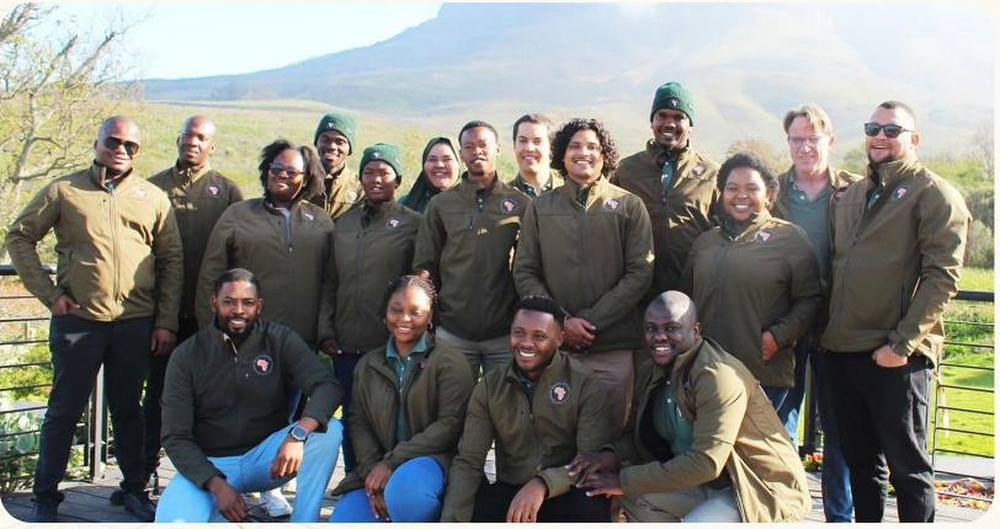
A Contour field team on site. The crews that clear the land are the crews that produce the material.
The group
Three divisions, one standard
Contour Enviro Group provides governance, shared services and commercial oversight across three specialist divisions. Contour Biomass sells the material those divisions produce.
Contour Green Solutions
Restoration, vegetation management and field operations — invasive-alien control, protected-area operations, high-angle access and field assessment and spatial planning.
Contour Training Academy
QCTO and multiple SETA-accredited learning for conservation, nature-based tourism and project management. Over 2 000 conservationists trained since 2018.
Grasshopper Green Technologies
An environmental operating system linking projects, field telemetry, geospatial data and verification reporting.
Credibility
What stands behind a load
Figures from the Contour Enviro Group Company Profile, 2026.
Recognition
SAB Foundation Tholoana Award
Enterprise development recognition through the SAB Foundation.
WESSA National Award for Corporates
National environmental recognition from WESSA.
Nedbank Business Ignite winner
Also a Western Cape Entrepreneurship Awards finalist and a Rocket Fuel Award recipient.
Our track record
Who the group has worked with
Since 2017 Contour Enviro Group has delivered training, environmental and conservation projects for conservation authorities, government departments, NGOs, foundations and private landowners across the Western Cape.
Work with us.
Whether you are buying material, clearing land or looking for a supply partner, start with a conversation.
Applications
Where the chip goes
| Application | Grade | Depth or rate | What it does |
|---|---|---|---|
| Orchard and vineyard floors | 30–50 mm | 50–100 mm deep in the work row | Cuts surface evaporation, moderates soil temperature, suppresses weeds |
| Nursery beds and container standing | 15–30 mm | 50–75 mm | Clean working surface, weed suppression, moisture retention |
| Potting and compost blends | 15 mm | As a blend component | Carbon source and structure; compost before use in growing media |
| Livestock and poultry bedding | 30 mm | 75–150 mm | Absorbent, low dust, composts into a soil amendment afterwards |
| Stables and arenas | 30 mm, low fines | 100–150 mm | Cushioning and drainage with less dust than sawdust |
| Farm roads and yards | 50 mm or unscreened | 100–150 mm over a compacted base | Drains, holds down dust, easily topped up |
| Erosion control | 50 mm or coarse | Placed on contour | Slows overland flow and traps sediment on disturbed ground |
| Landscape and park beds | 30 mm | 50–75 mm | Weed suppression and a finished appearance |
The water argument
Mulch is irrigation you do not have to pump
A province whose catchments are being drained by invasive trees is an odd place to leave bare soil evaporating in the sun. Mulching with the wood from those same trees closes the loop in a way that is hard to argue with.
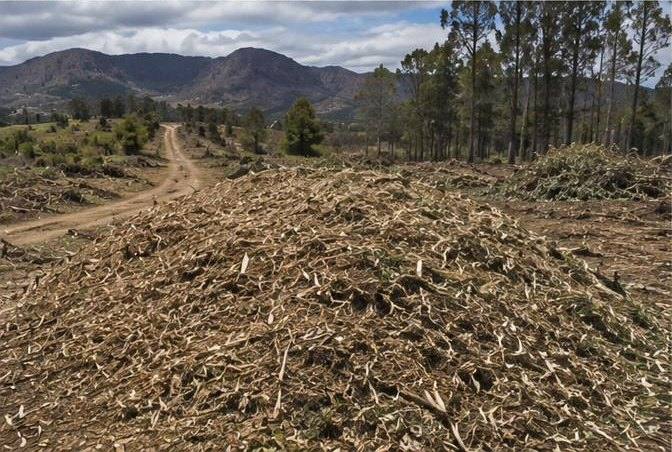
Coarse chip surfacing on a farm track — drains, holds down dust, and is topped up rather than regraded.
- A surface mulch layer sharply reduces evaporation from bare soil
- Soil temperature swings are moderated, which protects shallow feeder roots
- Weed germination drops, reducing herbicide passes and hand-weeding
- Organic matter builds slowly at the soil surface as the chip breaks down
- Rain and irrigation infiltrate instead of running off a capped surface
Use it as a surface mulch. Fresh chip worked into the soil temporarily ties up nitrogen as it decomposes — on top of the soil, that effect is minimal.
The journey
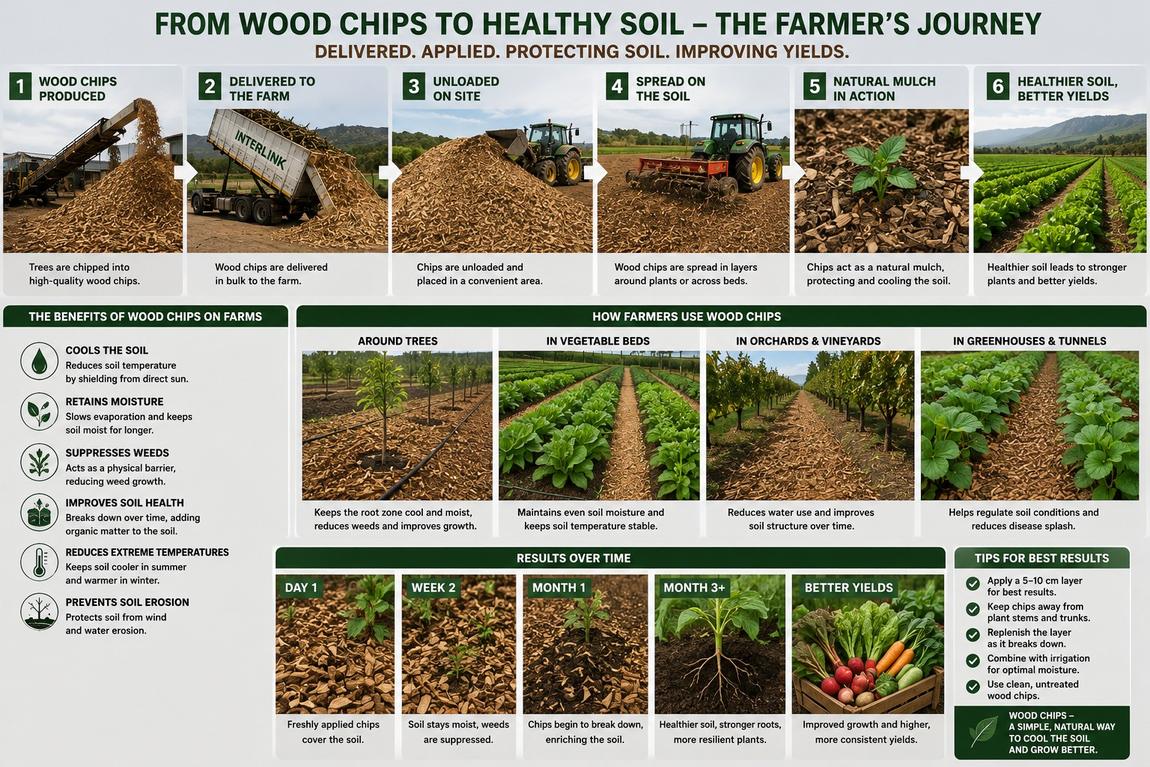
Wood chips to healthy soil — the farmer’s journey
From the chipper to the crop, and what the mulch layer does to your soil over the season that follows.
 Open full size ↗
Wood chips produced, delivered to the farm, unloaded on site, spread on the soil, acting as a natural mulch — and the healthier soil and better yields that follow.
Tap or click the image to open it full size
Getting it right
Four practical rules
Keep it off the stems
Leave a clear collar around trunks and stems. Mulch piled against bark holds moisture where you do not want it.
Deep enough to work
Under 50 mm and weeds come straight through. Aim for 50–100 mm and top it up rather than replacing it.
Ask about seed
Chip from seeding acacias can carry viable seed. For sensitive sites, ask for material chipped outside the seeding window, or composted at temperature.
Watch the stockpile
Large fresh piles heat as they compost. Keep them under about 4 m and turn long-term stockpiles.
Working out an annual mulch volume?
Send hectares and depth and we will convert it to tonnes, tell you the delivered price and set up a seasonal slot.

The case for clearing
Beautiful, useful, and in the wrong place
Pines, gums, wattles, rooikrans and hakea were brought to the Cape deliberately — for timber, tannin, shade and dune stabilisation. They escaped, and the Cape has been paying for it ever since.
The whole picture, on one page
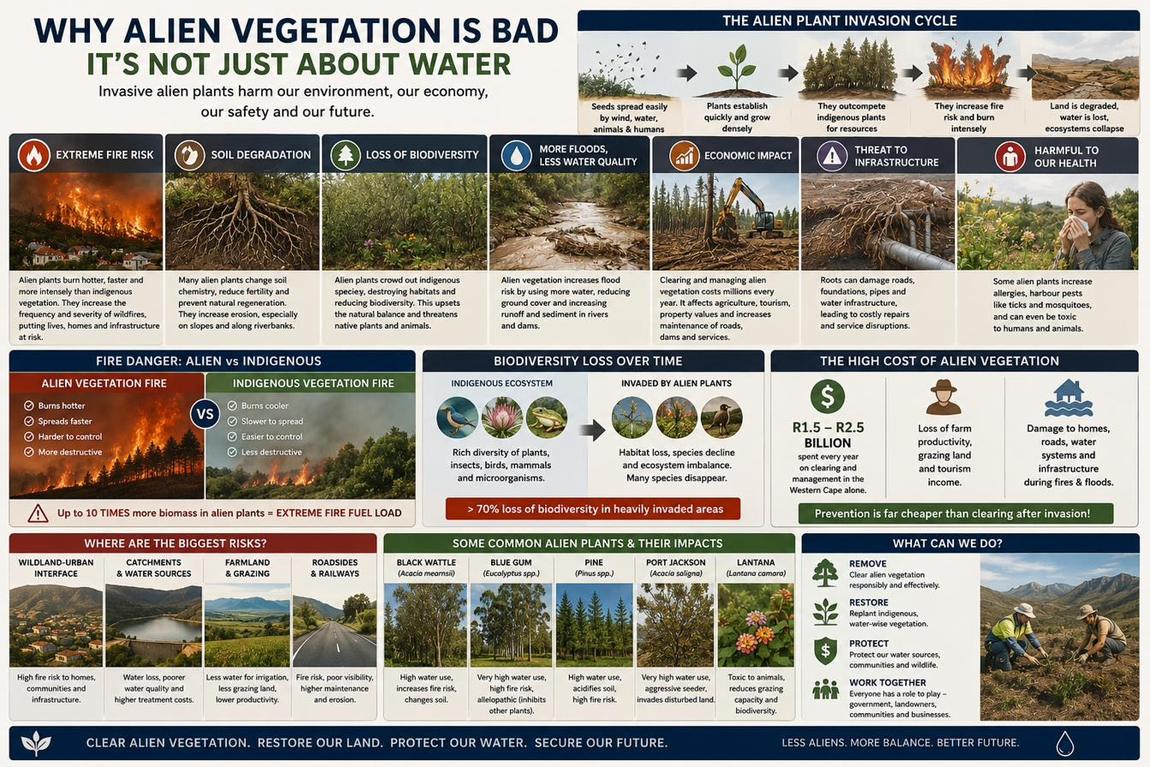
Why alien vegetation is bad — the summary
 Open full size ↗
The alien plant invasion cycle, biodiversity loss over time, where alien plants are the biggest risk, common alien plants and their impact, and the economic cost of leaving them standing.
Tap or click any image on this page to open it full size
Fire
Invasive stands do not just burn — they burn hotter, faster and over a longer season than the fynbos they replaced.
Fuel amount
More material to burn
Dense woody invasions can increase the amount of combustible material on a site.
Fuel arrangement
Connected fuel layers
Vegetation structure can connect ground, shrub and canopy fuels, affecting fire behaviour.
Site conditions
Weather and terrain matter
Wind, moisture, slope and management influence the outcome. There is no universal temperature multiplier.
Water
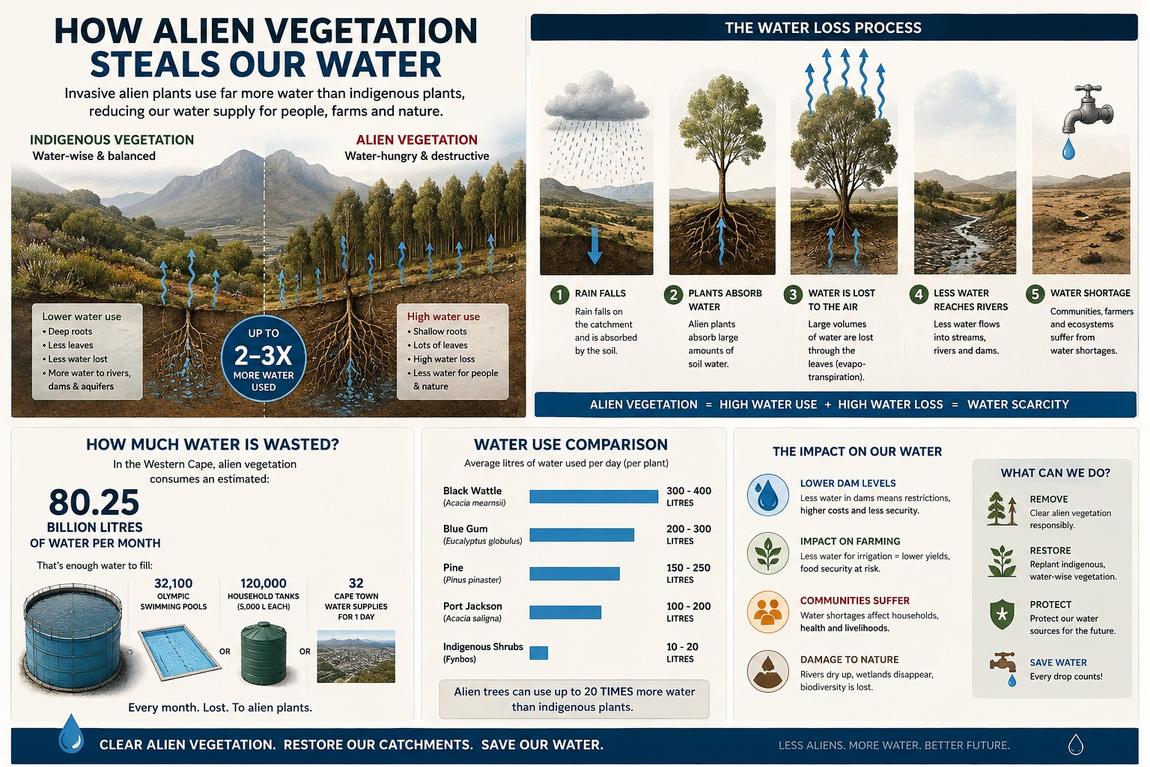
And every day they stand, they take water out of the catchment before it ever reaches a river or a dam.
 Open full size ↗
How alien vegetation steals our water: the water loss process from rainfall to shortage, how much is wasted, a water-use comparison by species, the impact on dams, farming and communities, and what can be done.
Start here
What makes a plant ‘invasive alien’
An alien plant is simply one from somewhere else. Most are harmless. A small number arrive without the insects, fungi and grazers that kept them in check at home, grow faster than anything native, seed prolifically, and take over. Those are the invaders.
- No natural enemies. Nothing here evolved to eat, infect or compete with them.
- Prolific seed. A single wattle can bank hundreds of thousands of seeds in the soil, viable for decades.
- Fire-adapted, and fire-promoting. Many seed heavily after fire, so each burn thickens the invasion.
- Deeper roots. They reach water that fynbos, restios and grasses cannot.
- Fast growth. They shade out and replace slower native vegetation within a few seasons.
How they got here
Pines came from Europe from the 17th century onward for timber, and are now the backbone of commercial forestry. Their light, wind-borne seed carries far beyond the plantation fence.
Australian acacias — black wattle, Port Jackson, rooikrans — arrived from the 1830s onward for tannin, firewood, shade and to stabilise drifting dunes. Black wattle is recorded in South Africa from 1871. They did the job, then kept going.
Eucalypts came for fast timber, windbreaks and bee forage, and remain valuable in plantations — while invading river lines wherever they escape.
Hakea was planted as hedging. It now carpets whole mountainsides in the Boland.
The scale
This is not a garden problem
The condensed figure is the one to hold onto. Spread thinly across ten million hectares, the invasion looks survivable. Compressed to the area it would cover at full canopy — one and a half million hectares — it is the size of a small country, and it is still expanding.
Five reasons it has to come down
Each one is enough on its own
It drinks the catchments dry
Le Maitre et al. (2016) estimated national annual flow reductions of 1 444 million m³. The 2019 Water Fund summary provides a separate historical assessment for Cape Town's catchments.

It turns fires into disasters
Dense woody invasions can add fuel and change its structure. Fire behaviour also depends on weather, moisture and terrain.
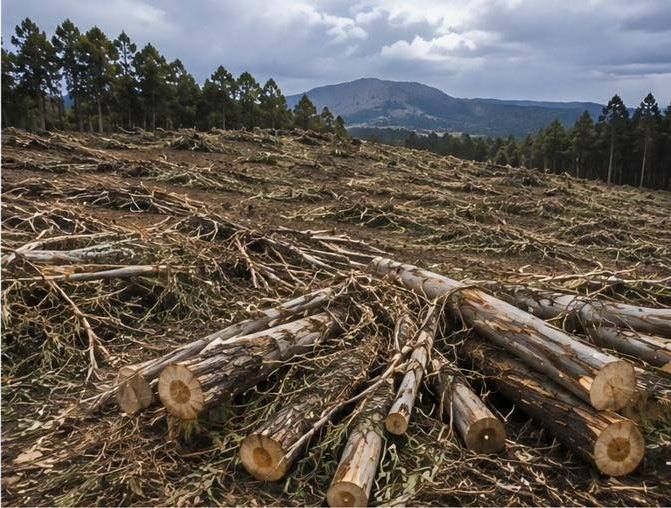
It erases the fynbos
The Cape Floristic Region holds about 9 000 plant species, two-thirds found nowhere else. Around 2 000 of them are threatened by invasion.
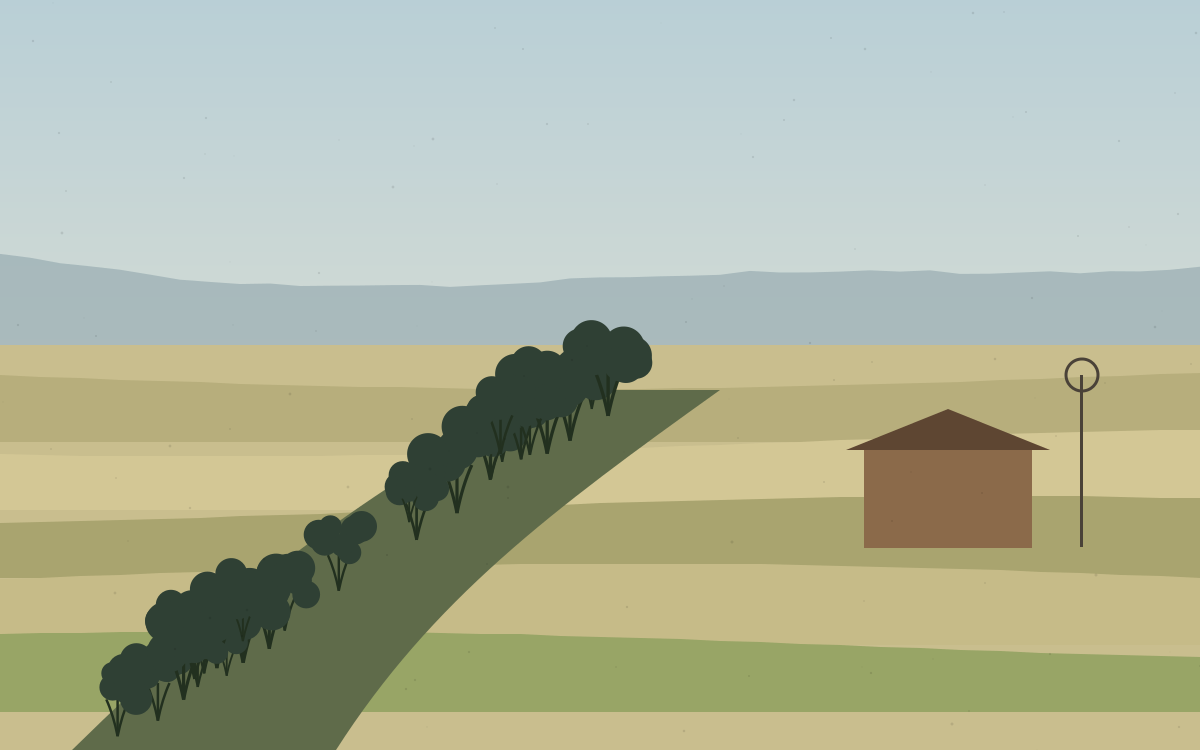
It takes farmland out of production
Grazing lost, irrigation water lost, vleis and drainage lines choked, and a fire risk sitting on the boundary fence.
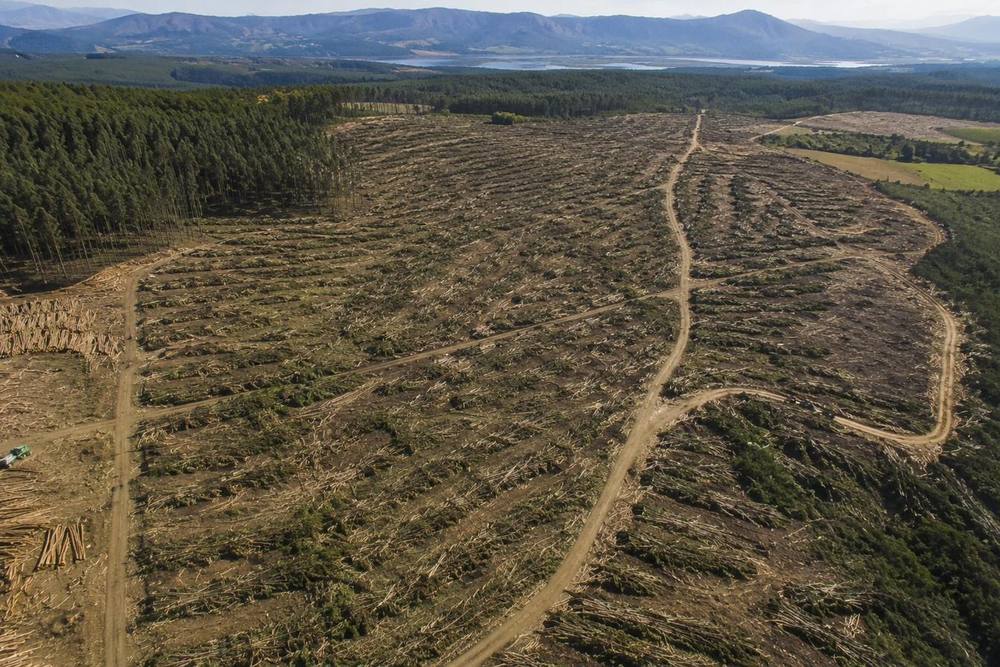
The law requires it
Under NEMBA, listed invasive species must be controlled by the landowner. It is a legal duty, not a conservation preference.
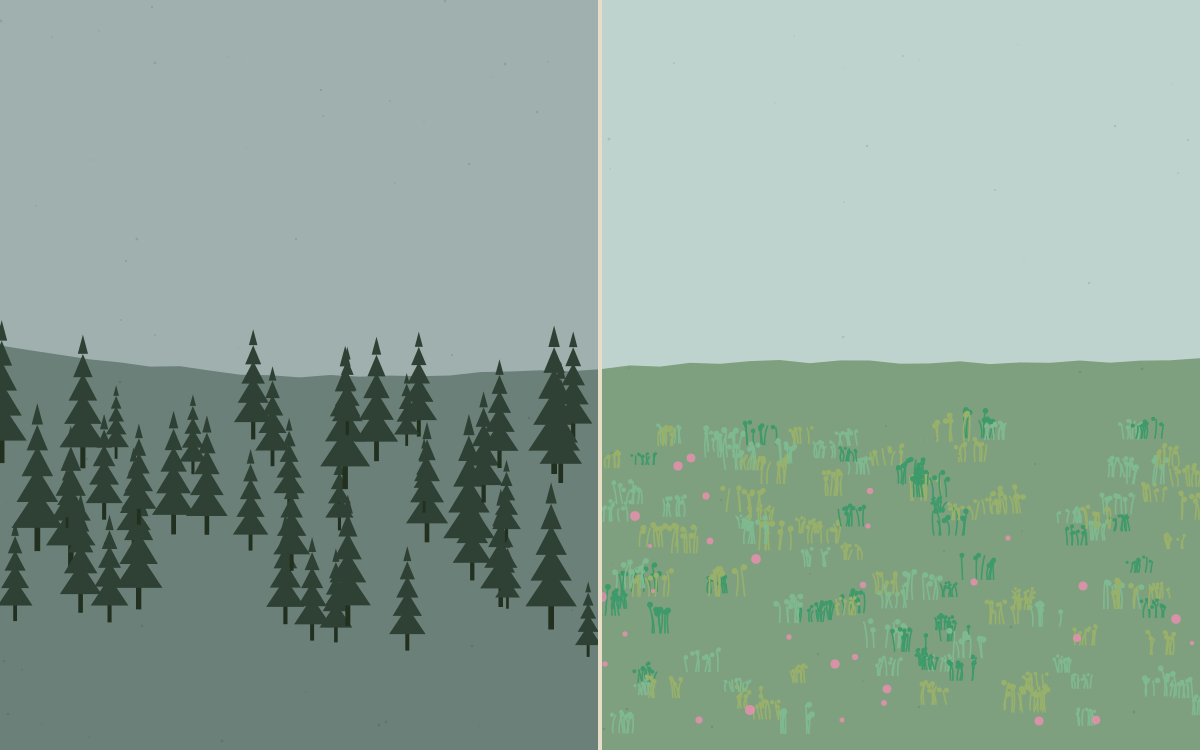
And clearing works
Cleared catchments return water within a season or two, fynbos comes back on its own, and the wood pays for part of the job.
Where the water goes
Three genera do most of the damage
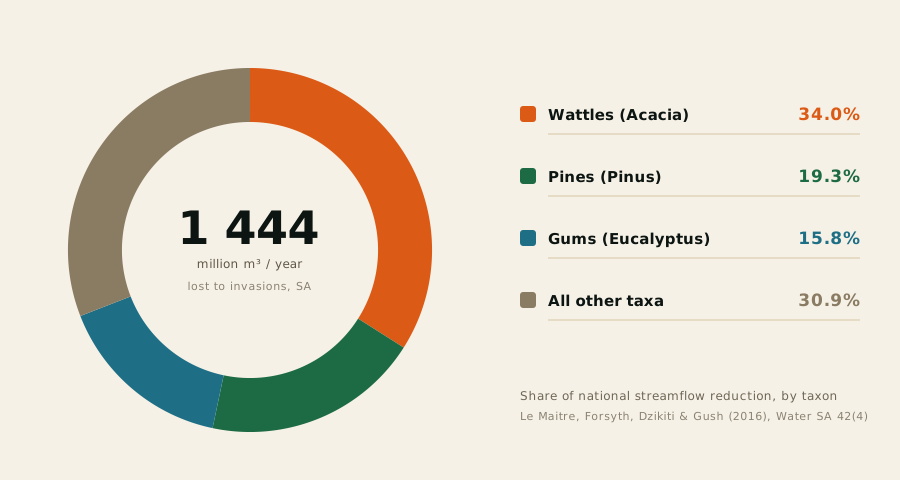
Wattles, pines, gums
Of the streamflow South Africa loses to invasion each year, wattles account for roughly a third, pines for about a fifth, and eucalypts for about a sixth. Together, close to seventy percent.
Those same three groups are the bulk of what Contour clears — and the bulk of what Contour Biomass sells. The species doing the most damage produce the most usable wood, which is the single fact that makes this business work.
Every load bought is a load that leaves the mountain.
The wood has to come off either way. Buying it turns a disposal cost into a resource, and gets the fire hazard off the slope faster.
Availability board
Find material that fits your needs
Check published stock or send us your requirement. We confirm the species, quantity, specification and access conditions before quoting collection or delivery.
Contact us for current availability.
Send your product, quantity and location to our team.
Request availability →Availability, specification and price are confirmed for each enquiry before an order is accepted. A listed estimate is not a stock reservation.
Reading the board
What each column tells you
| Column | What it means for you |
|---|---|
| Site and region | Where the material is. Distance to a national road is on the site page — it usually matters more than straight-line distance. |
| Species | Decides the end use. Rooikrans and wattle burn hot and long; pine and hakea chip cleanly; gum gives you poles and sawlogs. |
| Status | Available — take it now. Limited — a single buyer could finish it. Opening soon — reserve ahead. Allocated — spoken for. |
| Available tonnes | Estimated green tonnes recorded at the last stock check. Confirm the remaining quantity before booking transport. |
| Form | How the material is presented today: standing, felled, stacked at a landing, or already chipped. |
Published tonnages are indicative green-mass estimates. The unit and method used to confirm the sale quantity are agreed in the quotation.
Quick check
How much space will that tonnage need?
Biomass is sold by mass and hauled by volume. This gives you a rough conversion before you book transport.
Planning estimate only. Density, moisture and packing vary; use the actual usable volume and legal payload for your vehicle. The lower limit determines each load. Verify loading and axle weights before transport.
Cannot see what you need?
Sites come onto the board as contracts are awarded, and clear quickly when a single buyer takes a block. Send us a standing requirement and we will contact you before a matching site is published.
Found a site that fits?
Open it, check the access and haul distance, then send us the tonnage you want held.
Reason 03
Fynbos and biodiversity
The Cape Floristic Region is the smallest and richest of the world's six floral kingdoms. It is also the one being quietly replaced by trees from Australia and Europe.
What is at stake
Plants that exist nowhere else on earth
Left: a slope under dense pine invasion. Right: the same ground after clearing, with fynbos returning from the soil seed bank.
Why fynbos loses
Fynbos is adapted to poor, sandy, nutrient-starved soils. That is precisely its advantage — almost nothing else can live there, so an extraordinary number of specialised species evolved to fill the gaps.
Australian acacias are nitrogen-fixing. They manufacture their own fertiliser, enrich the soil around them, and in doing so destroy the very condition fynbos depends on. Even after the trees are removed, enriched soil favours weeds over the original vegetation.
That is why clearing early is so much cheaper than clearing late. A young invasion is a vegetation problem. An old one is a soil problem.
The knock-on effects
It is not only plants
Rivers and fish
Dense riparian invasion shades out riverbank vegetation, alters flow and changes water chemistry. Clearing in the Cape catchments has been linked to improved habitat for threatened freshwater fish such as the giant redfin.
Pollinators and specialists
Many fynbos plants depend on a single insect or bird species. Remove the plant and the relationship goes with it — and these are relationships that took millions of years to form.
Soil ecology
Nitrogen fixation, dense litter and altered fire regimes change soil chemistry and the microbial community. Invaded soils do not behave like fynbos soils.
Grazing and thicket
Where invasion spreads into grassland and thicket, the browse and grazing that livestock and wildlife depend on simply disappears under a closed canopy.
The good news
Fynbos comes back on its own
Fynbos species bank seed in the soil and many are triggered by fire and disturbance. Clear an invaded site before the soil is fundamentally altered and native vegetation frequently returns without replanting.
A Contour field crew on a Western Cape restoration site.
The Greater Cape Town Water Fund reports that as invasives are removed, the diversity of native plant life in the Cape Floral Kingdom recovers, soil ecology improves, and the frequency and severity of wildfires drops.
That recovery is not automatic. It depends on three things: clearing before the seed bank is exhausted, treating stumps so the stand does not coppice, and returning for follow-up on seedlings. Skip any of the three and the invasion simply re-establishes, usually denser than before.
- Clear before the native seed bank is lost
- Treat every stump at the time of cutting
- Return for follow-up passes on seedlings
- Remove the biomass so it does not fuel the next fire
Restoration is the point. The biomass is the by-product.
Buying it funds more hectares cleared, and gets the material off sites where it would otherwise be burned in place.
The energy arithmetic
Buy joules, not tonnes
Dry wood carries roughly 18–20 MJ per kilogram. Water carries none, and boiling it off consumes energy you paid for. This is why two loads at the same price per tonne can differ by a third in delivered energy.
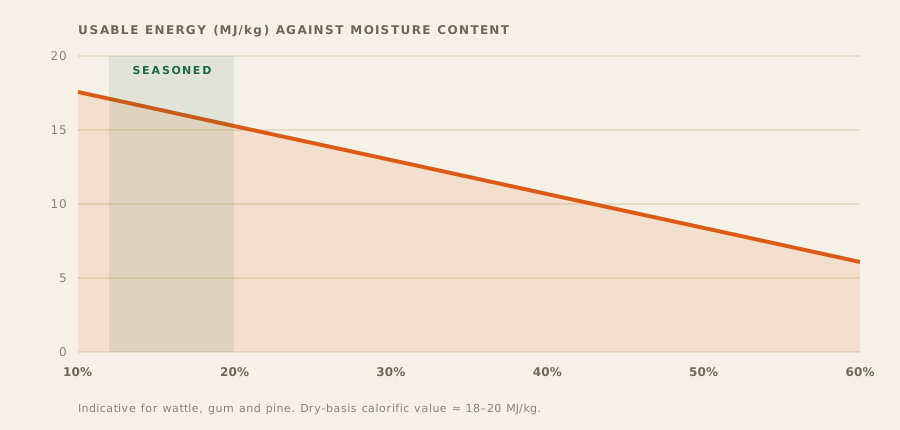
Specification
What we can hold across a contract
| Parameter | Standard | On request |
|---|---|---|
| Particle size | P31 equivalent, nominal 30 mm | P16, P45, or unscreened hog fuel |
| Moisture, as delivered | Green: 40–55% | Seasoned: under 25%, air-dried on site |
| Species | Declared per load | Single-species loads where site supply allows |
| Ash | Typically 1–3% | Batch testing for contract volumes |
| Fines | As produced | Screened and de-fined at a premium |
| Contamination | Chipped off hard standing where possible | Metal detection on request |
If your plant has a fuel specification sheet, send it. It is far quicker for us to tell you which sites can meet it than to negotiate a generic grade.
Who runs on it
Existing solid-fuel users
Process heat and steam
Food processors, distilleries, canneries and abattoirs replacing coal or LPG on an existing solid-fuel boiler.
Kilns
Brick, lime and ceramics kilns that already burn solid fuel and need consistent, local supply.
Dryers
Grain, fruit, rooibos and timber dryers where fuel cost is a direct line in the product cost.
Charcoal producers
Kiln operators taking dense acacia billets. Rooikrans and black wattle are the preferred feedstock.
Security of supply
The honest position
Clearing work is contract-driven. Sites open and close, and fire season closes access. Anyone promising you unlimited fixed-price biomass indefinitely is not being straight with you.
- We contract volume against a named portfolio of sites, not a single block
- Contracts are written with a stated tonnage band, not an open promise
- Fire-season and wet-weather access risk is disclosed up front
- Where we cannot meet a month, we say so before you plan around it
Why the supply exists at all
Invasive clearing in the Western Cape is a long-term programme, not a project. Tens of thousands of hectares have been cleared and require repeated follow-up, and far more remains untreated. The biomass is not a windfall — it is the predictable by-product of work that has to continue for decades.
Send us your fuel spec.
Particle size, moisture ceiling, monthly tonnage and your offload arrangement. We will tell you what we can commit to and from where.
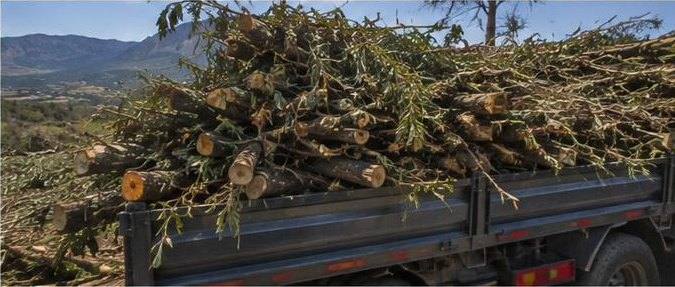
What you are buying
Material, in place, with a boundary around it
An on-site sale is a defined parcel: a mapped block, a species mix, an estimated tonnage and a collection window. What you take is weighed out, so you pay for what actually leaves the gate.
What comes with the parcel
- A mapped block with marked boundaries
- Species declaration and estimated green tonnage
- Agreed collection window and site access hours
- Induction onto the site, including safety rules
- Weighbridge ticket or load count for every vehicle
What you bring
- Transport suited to the access grade on the site sheet
- Loading equipment, or a crew that can hand-load
- Chainsaw operators if you are cross-cutting on site
- Your own PPE, first aid and fire extinguisher
- Proof of insurance for vehicles and people on site
Three ways material is presented
Pick the one your equipment can handle
Standing
The trees are still up. You fell, cross-cut and extract. Lowest price per tonne, highest effort, and only offered where terrain and safety allow.
Felled, lying where it fell
Contour has dropped and stump-treated the stand. You cross-cut, gather and load. The common arrangement on lowland sites.
Stacked at a landing
Material has been extracted and stacked at a hard standing where a truck can turn. Highest on-site price, and by far the fastest to load.
Access and extraction are assessed before material is offered. Specialist extraction, where required, must be scoped and priced before a collection point is confirmed.
What it costs you
The price on the board is not the whole cost
Buyers new to in-field purchase often price the tonne and forget the extraction. This is the honest arithmetic.
| Cost line | Who carries it | Notes |
|---|---|---|
| Material price | You | Written quotation based on species, condition, access and the agreed quantity |
| Felling and cross-cutting | You, on Form A and B | Budget operator time, fuel, chains and downtime |
| Loading | You | Hand-loading is slow; a grab or loader changes the economics quickly |
| Transport | You | The biggest single variable. Check the haul distance on the site sheet |
| Stump treatment and follow-up | Contour | Always ours — regrowth control is part of the clearing mandate |
| Site rehabilitation | Contour | Brash management and erosion control stay with us |
Site rules
Non-negotiable, on every site
These sites sit in working catchments, nature reserves and on private farms. Access is a privilege that a single incident can end for everyone.
- Book your collection slot — no unannounced arrivals
- Sign in and out at the site office or with the site foreman
- Full PPE: hard hat, boots, high-visibility, eye and ear protection
- No open flame, no smoking outside designated areas
- Stay inside the marked block; adjacent stands are not yours
- Fire-danger days close sites entirely, at short notice
- No indigenous species may be cut, ever
- Stumps stay as we treated them — do not re-cut them
- Brash lines and erosion works must not be driven over
- Children and passengers stay out of active work areas
- Vehicles carry a working extinguisher between October and April
- Damage to gates, fences or tracks is repaired at your cost
Common questions
Buying on site
Is there a minimum tonnage?
Can I choose which trees to take?
What if the tonnage is not what you estimated?
Can my own contractor fell for me?
How long do I have to remove it?
Know your tonnage? Let us open a parcel for you.
Send the volume, the species you want and the equipment you will bring. We will point you at the sites your transport can actually reach.
How it works
From assessed site to verified work
Clearing invasive vegetation properly is a sequence, not an event. Skip a step and the stand is back within three seasons — denser than before, and more expensive to fix.
The sequence
Seven steps, in this order, every time
Survey and mapping
Boundaries are walked and mapped, species and density recorded, sensitive features flagged. Available spatial data supports the field assessment where useful.
Method and safety planning
Terrain decides the method: hand crews, mechanised felling, or rope technicians on high-angle ground. Each has its own risk assessment and rescue plan.
Felling
Trees are dropped in a controlled direction, away from watercourses, standing indigenous vegetation and infrastructure, and cut low enough to treat the stump properly.
Stump treatment
Coppicing species receive the prescribed stump treatment at cutting, where required. Coppicing species that are cut and left simply grow back multi-stemmed, which is worse than the original stand.
Cross-cutting and sorting
Stems are cut to length and sorted at the landing by end use: sawlog, pole, firewood billet, cordwood, chip. This is where product value is created or lost.
Extraction and presentation
Material moves to a landing a truck can reach — using equipment and methods selected for the site, access and agreed budget.
Follow-up
Seedlings germinate from the soil seed bank for years after the first clearing. Scheduled follow-up passes are what make the first pass worth doing.
Three ways in
The terrain chooses the method
Ground crews
Chainsaw teams working on foot. The workhorse of lowland and moderate-slope clearing — flexible, selective, and able to work around sensitive features a machine cannot.
Mechanised
Machine felling, extraction and chipping where slope and access allow. Far higher output per day, and the route to the volumes bulk buyers need.
High-angle
Rope technicians on cliffs and steep catchment slopes, with access and rescue arrangements planned for each site. Slow, specialised and expensive — and the only way to reach the pine invasions at the top of the catchments that matter most for water.
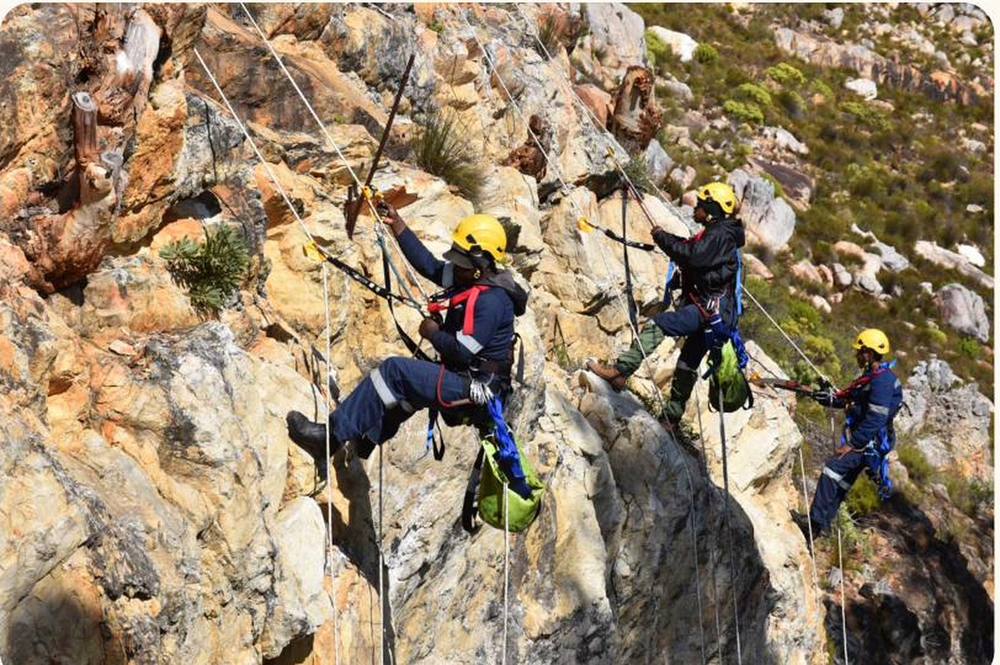
High-angle clearing on a Western Cape mountain face. Material from these sites is extracted to a landing before it is sold.
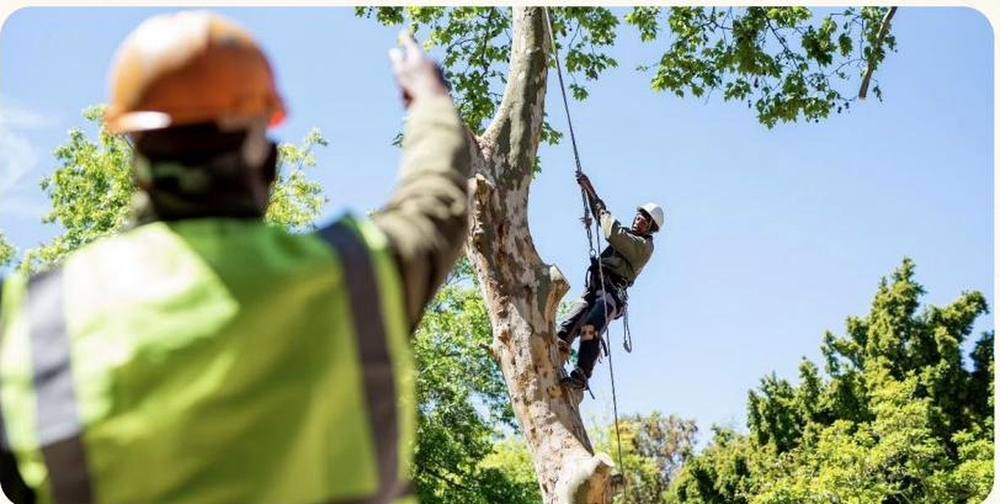
Controlled felling under supervision. Direction of fall protects watercourses, indigenous vegetation and the crew below.
Evidence
What gets recorded, and why you should care
Contour's field work is recorded through the group's environmental operating system — the same evidence chain used for catchment and client reporting. For a biomass buyer, that is what makes provenance real rather than a claim on a website.

Grasshopper OS — the group's environmental operating system, linking projects, field evidence, spatial data and reporting.
- Treated area, by block and by date
- Species and density before and after
- Photographic records from fixed points
- Person-days and crew deployment
- Field evidence linked to available geospatial data
- Follow-up passes and regrowth assessment
Safety
The part that is not negotiable
Trained, not improvised
Chainsaw operators, riggers and rope technicians work to defined competencies. The group runs its own QCTO-accredited training academy.
Planned rescue
Every high-angle site has a rescue plan before a rope leaves the vehicle. Remote catchment work is planned around extraction time, not just access time.
Fire discipline
No hot work on high fire-danger days. Machinery carries suppression equipment. Sites close when the index says close.
Buyers on site
Anyone collecting material is inducted, wears the required PPE and works inside a marked block, supervised by the site foreman.
Want to see it happening?
Site visits can be arranged for buyers taking contract volumes, and for landowners considering a clearing programme.
Contact
Talk to someone who knows the sites
Tell us what you need and roughly how much of it. We will tell you which site it comes from and what it will cost — collected and delivered.
+27 (0) 21 495 9257
Weekdays, business hours. Fastest way to check whether a site has what you need.
info@contourenviro.co.za
Send a specification and a tonnage and you will get a written response.
10 Stuart Close, Somerset West Business Park, Somerset West
Head office of Contour Enviro Group. Clearing sites are spread across the Boland, Overberg, West Coast, Cape Metro and Garden Route — site visits are arranged by appointment.
What to include
- The product you want — firewood, chip, round wood or fuel
- Tonnage, and whether it is once-off or ongoing
- Where it is going, and what vehicle can reach the gate
- When you need it
- Any specification that matters: moisture, particle size, species
Who to contact about what
So your message reaches the right desk
| If you want to… | Say this in your first line |
|---|---|
| Buy material from a listed site | “Enquiry on the availability board — [site name]” |
| Set up contract or repeat supply | “Contract supply enquiry — [tonnes per month]” |
| Have your own land cleared | “Landowner clearing assessment — [town or farm name]” |
| Sell us material you have already cut | “Material for sale — [species and estimated tonnes]” |
| Arrange a site visit | “Site visit request — [buyer or landowner]” |
| Ask about the data on this site | “Query on published data — [page]” |
Prefer to start with the board?
Check published listings or ask our team for current stock, specifications and access.
Two delivered formats
Chipped, or in length
Chipped
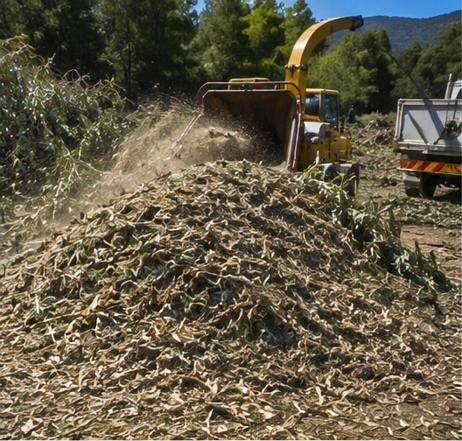
Material is chipped on site or at a depot and blown straight into a walking-floor trailer or tipper. Tell us your required particle size. Processing and screening capability, tolerances and availability are confirmed before an order is accepted.
- 15 mm — fine mulch, potting and compost blends
- 30 mm — the standard: orchard floors, bedding, boiler feed
- 50 mm — coarse: farm roads, erosion control, hog fuel
- Screening and fines limits by agreement, subject to available processing capacity
In the lengths it was cut
No chipping, no splitting. The material arrives as round wood so you can process it your own way — which most firewood merchants and mills prefer.
- 300–450 mm billets — braai and fireplace lengths
- 1.0–1.2 m cordwood — merchant processing
- 2.4 m lengths — poles, droppers, treatment plants
- Full-length stems — sawmills, by arrangement
How it travels
Matching the load to the road
Delivered price is dominated by transport. The right vehicle for the volume and the road is the single biggest lever on your landed cost.
| Vehicle | Typical payload | Best for | Where it can go |
|---|---|---|---|
| Tipper truck, 6 m³ | ≈ 1.9 tonnes standard green chip by volume | Nurseries, smallholdings, urban yards | Anywhere a delivery truck can turn |
| Tipper truck, 18 m³ | ≈ 5.8 tonnes standard green chip by volume | Farms, landscapers, small boilers | Good gravel and farm roads |
| Walking-floor trailer, 90 m³ | ≈ 28.8 tonnes standard green chip by volume | Boiler operators, board plants, bulk mulch | Hard standing and a clear turning circle |
| Timber truck with crane | ≈ 28 tonnes round wood | Sawmills, pole yards, merchants | Needs a firm offload area |
| Interlink flat-deck | ≈ 32 tonnes | Long-haul round wood | National routes and good approach roads |
Chip examples use the planning density of 320 kg/m³ shown on this site. Actual density varies. Each load is limited by the lower of usable body volume and the vehicle’s lawful payload, with axle limits and access checked separately. These are vehicle examples, not a declaration of Contour’s fleet.
Tell us what can physically reach your gate — overhead cables, weight limits, a tight entrance or a soft yard change the vehicle, and therefore the price.
What arrives with the load
Documentation agreed before dispatch
Buyers with certification obligations — food safety, organic, export or energy reporting — need provenance, not promises.
Weighbridge ticket
For sales by mass, agree the weighing method and required record before dispatch. Where a weighbridge is used, record gross, tare and net mass.
Species declaration
Which species are in the load and which site each came from.
Source site reference
The clearing block, the landowner category and the clearing mandate it fell under.
Moisture reading
On request, sampled per load. Essential for anything going into a boiler or a kiln.
Lead times
What is realistic
These are the windows we plan against. Fire-danger closures, rain on gravel roads and harvest-season transport shortages are the usual reasons a date moves.
| Order type | Typical lead time | Notes |
|---|---|---|
| Chip from an already-chipped stockpile | 3–7 days | Fastest route — check the board for sites listed as chipped |
| Chip produced to order | 10–21 days | Depends on chipper availability and site access |
| Round wood from a stacked landing | 5–14 days | Crane truck scheduling is usually the constraint |
| Standing stand, cleared to order | 4–10 weeks | Includes felling, stump treatment and extraction |
| Repeat contract deliveries | Scheduled | Weekly or monthly slots held against a signed offtake |
Send us the spec, the volume and the gate.
We will tell you which site it comes from, what the delivered price is, and the first date we can be there.
Who runs on it
Existing solid-fuel operations
Process heat and steam
Food processing, canning, distilling, abattoirs and laundries running biomass boilers for hot water and steam.
Brick, lime and ceramic kilns
High, sustained heat demand and existing solid-fuel handling. Among the most straightforward conversions.
Grain, fruit and rooibos dryers
Seasonal, intense fuel demand where the cost of drying is a direct line in the cost of the product.
Charcoal producers
Kiln operators taking dense acacia billets — rooikrans and black wattle are the preferred feedstock in the Cape.
The arithmetic
Buy energy, not mass
Dry wood carries roughly 18–20 MJ per kilogram. The water in green wood carries none — and boiling it off consumes energy you have already paid for. This is why moisture, not price per tonne, is the number to negotiate on.
How to compare an offer
- Ask for moisture as delivered, not oven-dry potential
- Convert to rand per gigajoule, not rand per tonne
- Include your own handling and storage cost
- Factor in ash handling — wattle is low-ash, roughly 1.5%
- Check what your grate and feed system can physically take
A worked example
Two offers at the same rand-per-tonne. One is green at 50% moisture, the other seasoned at 20%. The seasoned load delivers roughly half again as much usable energy per tonne, so the real cost per gigajoule is dramatically different — before you count the extra trucks needed to move the water.
If you can store and season material yourself, buying green is usually the cheaper route. If you cannot, pay for the seasoning.
Charcoal
The oldest use, and still one of the best
 Open full size ↗
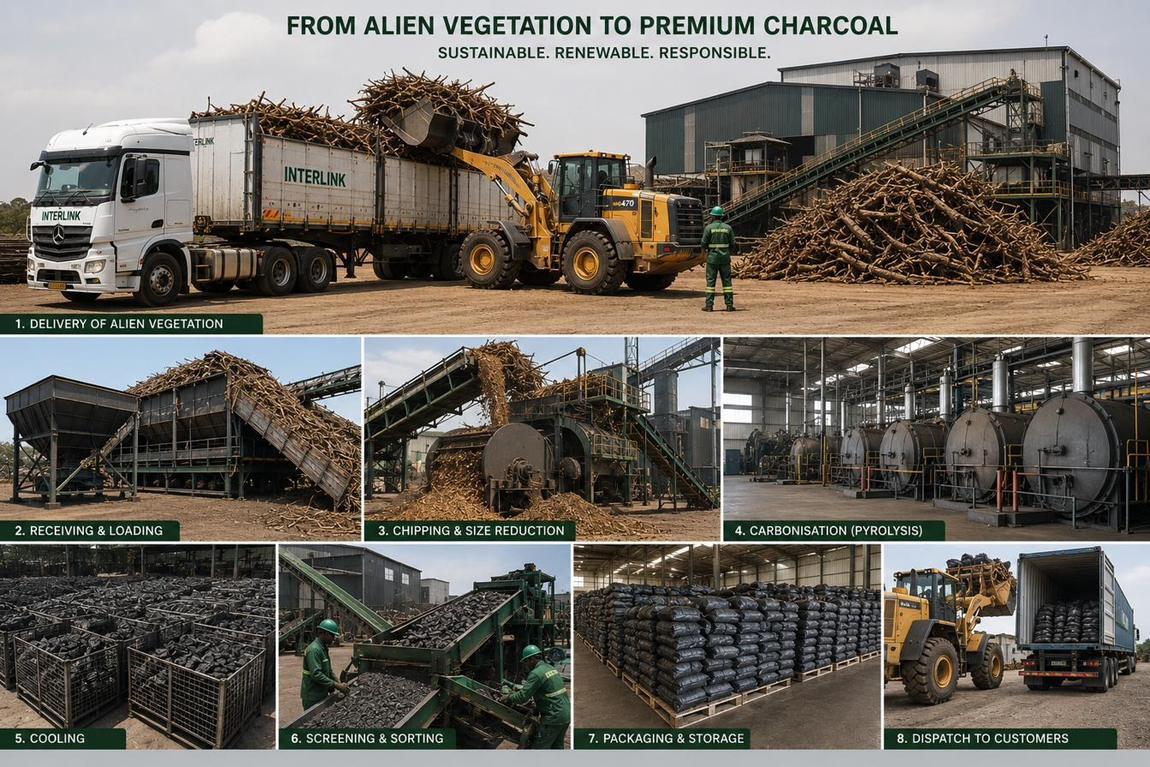
Delivery of alien vegetation, receiving and loading, chipping and size reduction, carbonisation (pyrolysis), cooling, screening and sorting, packaging and storage, then dispatch to customers.
Tap or click the image to open it full size
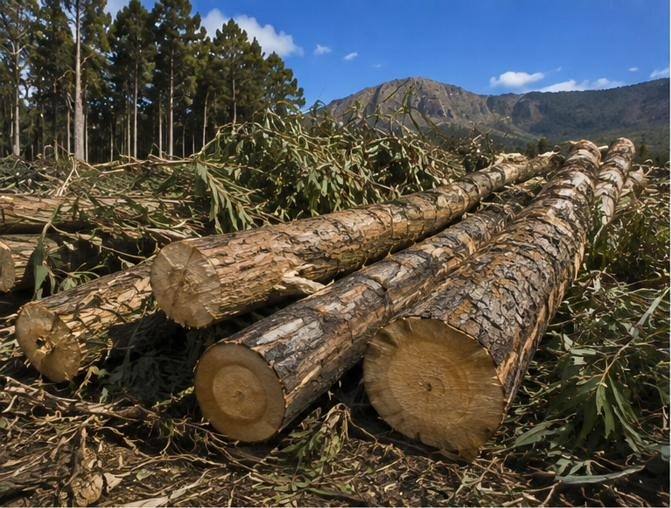
Dense acacia is the preferred charcoal feedstock in the Cape.
Converting invasive acacia into charcoal has been done successfully in South Africa for years, including by small enterprises built entirely around clearing invaded land. It concentrates the energy, cuts transport mass dramatically, and creates a product with an established domestic and export market.
Rooikrans and black wattle are the feedstocks of choice: dense, low ash and good charcoal yield. We supply billet-length material to kiln operators, and can supply from sites specifically because they carry the right species.
If you are setting up kilns and want a supply commitment before you invest, talk to us about a contract against a named portfolio of sites.
Send us your fuel specification.
Particle size, moisture ceiling, monthly tonnage and offload arrangement. We will tell you what we can commit to, and from which sites.
Buying
Orders, prices and delivery
What is the minimum order?
How is it priced?
Why do prices vary so much between sites?
Can I collect it myself?
Do you deliver outside the Western Cape?
What payment terms do you offer?
The material
Species, moisture and quality
Is it seasoned or green?
Can I get a single species?
Will the chip carry seed?
How clean is the chip?
What documentation comes with a load?
Legality and environment
Where it comes from
Is it legal to sell wood from invasive species?
Are you cutting indigenous trees?
Is this plantation timber?
Does burning this wood make it carbon neutral?
Landowners
Clearing your own property
Do I have to clear invasive plants on my land?
Can the biomass pay for the clearing?
How long does clearing take?
Will it grow back?
Still have a question?
Call us, or send it through. If it is a good question we will add it to this page.
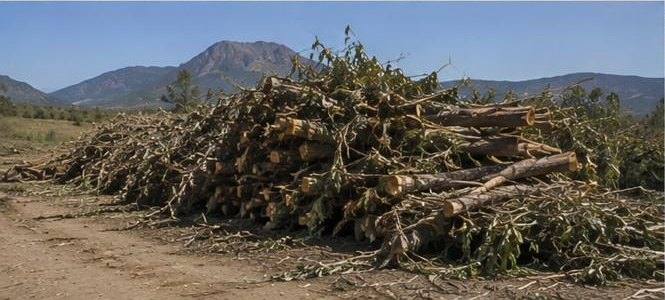
Reason 04
What it costs a farm
For a Western Cape farmer, invasive alien vegetation is not an environmental abstraction. It is lost grazing, lost irrigation water, a blocked vlei, a fire risk on the boundary and a legal duty attached to the title deed.
Five ways it takes money off a farm
In roughly the order farmers notice them
Water, before it reaches you
Riparian wattle and gum along your drainage lines and river frontage draw directly from the water table. That is irrigation water leaving the farm through a tree you did not plant.
Grazing and browse
A closed acacia canopy ends the pasture beneath it. Camps that carried stock become unusable, and the invasion spreads along every watercourse and fence line.
Fire risk on the boundary
An invaded block beside your orchards, sheds or homestead is a standing fuel bed. Insurers increasingly want to know how it is managed.
Blocked vleis and flood damage
Dense stands trap sediment and debris in drainage lines. When a big rain comes, water goes where the channel used to be — through roads, lands and infrastructure.
Compliance and land value
Listed invasive species must be controlled by the landowner. A dense, untreated invasion is a liability disclosed at sale — and a discount on the price.
The turnaround
Clearing pays for part of itself
Coarse chip surfacing on a farm track — one of the cheapest uses for material that would otherwise be burned.
Three ways farmers work with us
1. We clear, and the biomass offsets the cost. Where a block carries enough volume and the access is workable, the value of the material reduces what you pay for the clearing.
2. You clear, we buy the material. If you already have a team and a chainsaw, sell us the stacked wood rather than burning it.
3. You clear, and keep it. Chip it for your own orchard floors, farm roads and bedding. We will price the chipping alone.
Put it back into the farm
What the material is worth on your own operation
Orchard and vineyard mulch
A 50–100 mm chip layer cuts evaporation from the soil surface, moderates soil temperature and suppresses weeds — reducing both irrigation demand and herbicide passes.
Farm roads and yards
Coarse chip over a compacted base drains, holds down dust and can be topped up. Cheaper than gravel where you already have the wood.
Livestock and poultry bedding
Absorbent, low-dust bedding that composts afterwards into a soil amendment rather than becoming a disposal problem.
Fencing material
Straight gum and wattle give droppers and posts. Not plantation-grade, entirely adequate for internal fencing.
Fresh chip should sit on the soil as a surface mulch, not be worked into it — incorporated fresh chip temporarily ties up nitrogen. Keep it clear of stems and trunks.
Start with a walk
What an assessment looks like
- A site walk with you, at your convenience
- Mapped blocks with species and density recorded
- Field assessment supported by available spatial data
- An estimated tonnage, split by likely product
- A clearing method and cost, set against the biomass value
- A follow-up schedule so it does not come straight back
Ground survey and available spatial data inform the assessment before work is quoted.
Book a walk over your invaded blocks.
No obligation. You will get a mapped estimate of what is there, what it costs to clear, and what the material is worth against that cost.
Reason 02
Fire risk
Fynbos is meant to burn. Invaded fynbos is not — and the difference between the two has cost the Cape homes, plantations and lives.
The fire case, illustrated
Alien vegetation and fire risk
Fuel amount
More material to burn
Dense woody invasions can increase the amount of combustible material on a site.
Fuel arrangement
Connected fuel layers
Vegetation structure can connect ground, shrub and canopy fuels, affecting fire behaviour.
Site conditions
Weather and terrain matter
Wind, moisture, slope and management influence the outcome. There is no universal temperature multiplier.
The difference
Fuel load changes everything
Fire is native to fynbos. The vegetation is adapted to burn on a roughly 12 to 20 year cycle, and many species need fire to release seed. Fire behaviour varies with stand age, weather, moisture and terrain.
A natural fynbos fire
- Low, light fuel — mostly fine shrubs and restios
- Moves fast, burns out quickly
- Seed survival depends on fire severity and conditions
- Recovery varies with species, season and fire history
A fire in an invaded stand
- Many times the fuel load, standing and on the ground
- Higher fuel loads can increase fire intensity under suitable conditions
- Crown fire, ember cast, spot fires far downwind
- Soil damage, erosion, and a seed bank primed to re-invade
Knysna, 2017
What it looks like when it goes wrong
In June 2017 extreme fires along the southern Cape coast destroyed homes, farms and plantations and killed people. More than half the total area burned was invaded by pines, and researchers concluded that invasive fuel loads changed how those fires behaved.
Nelson Mandela University researchers compared the flammability of native fynbos, native thicket and invasive alien shrubs. Dry biomass and fuel structure — how much material there is, and how it is arranged — were consistently the strongest predictors of how fiercely and completely vegetation burned.
In plain terms: invasion does not just add fuel, it changes the architecture of the fuel. A dense wattle or pine stand carries fire into the canopy, and once fire is in the canopy it is no longer being fought on the ground.
Clearing invasive stands is fuel-load management. It does not stop fires. It changes what happens when one starts.
Dense invaded stands carry fire into the canopy, where it is beyond ground crews.
Who carries the risk
Four groups, one hazard
Farms on the mountain edge
An invaded neighbouring slope is a fuel bed pointed at your orchards, sheds and homestead. Clearing your own boundary is the only part of it you control.
Plantations and reserves
Invasion between blocks turns a manageable compartment fire into a landscape fire, and the same seed bank re-invades the burn scar.
Homes on the wildland edge
Ember cast from a crown fire lands hundreds of metres ahead of the front. Fuel reduction within the interface is the single most effective mitigation available.
Catchments and water
Hot fires on steep slopes strip soil cover. The next rain moves ash and soil into the dam, and the catchment loses both storage and water quality.
What clearing achieves
Measured in fuel, not intentions
Standing fuel is removed
The stems that would carry fire into the canopy are cut and taken off the slope entirely.
Brash is managed, not abandoned
Tops and small branches are stacked, chipped or arranged on the contour so they do not simply become a ground-fuel bed.
Stumps are treated where required
Cut stumps are treated so the stand does not coppice straight back into the same fuel load within three seasons.
Follow-up is scheduled
Seedlings from the soil seed bank are dealt with in follow-up passes. Clearing once and walking away wastes the whole effort.
This is exactly why selling the biomass matters. Material that leaves the site on a truck is fuel that cannot burn — and it pays for part of the operation that removed it.
Clearing a firebreak or a boundary this season?
If there is volume in it, the material has a buyer. Talk to us before you stack and burn it.
Grades
Four ways it is sold
| Grade | Length | Moisture | Typical buyer |
|---|---|---|---|
| Green billets, in the round | 300–450 mm | 40–55% | Merchants who season and split themselves |
| Green cordwood | 1.0–1.2 m | 40–55% | Processors with a splitter and yard space |
| Seasoned split, bulk | 300–400 mm | Under 25% | Retailers, lodges, restaurants, filling stations |
| Seasoned split, bagged | 250–350 mm | Under 20% | Retail, forecourts, tourism operators |
Why moisture is the whole story
Wet wood does not burn badly because it is poor wood. It burns badly because a large share of its energy is spent boiling off water before the wood can burn at all.
Freshly cut Cape hardwood sits around 45% moisture. Under the Cape sun, stacked off the ground and open to the wind, it will reach 20–25% in three to six months. That is the difference between a smoky, sooty fire and a clean hot one.
Buying green and seasoning it yourself is the cheapest firewood you will ever own — if you have the space and the patience.
The woods
What each one does on a fire
The Cape benchmark
Acacia cyclops. Dense, low ash, and it drops into a deep bed of coals — which is why it is the braai wood most Capetonians grew up with. Coastal, so it comes off the West Coast and Agulhas Plain sites.
The long, hot burn
Acacia mearnsii. Around 18–20 MJ/kg dry with low ash. Excellent for heating and pizza ovens, and the highest-volume firewood species on our board thanks to dense river-line invasions.
Heat and volume
Eucalyptus. Burns hot and gives good coals, but seasons slowly and can spit when green. Splits far more easily when fresh than when dry — split it early.
Kindling and starter
Lighter and faster-burning. Poor as a main fire wood, genuinely good as kindling and starter material, and priced accordingly.
Seasoning
How to do it properly
Most complaints about firewood are complaints about storage. If you are buying green to season, this is the method.
Split before you stack
Split wood dries several times faster than round wood, because the split face has no bark sealing it.
Get it off the ground
Pallets, rails or gravel. Wood stacked directly on soil wicks moisture back up and rots from the bottom.
Stack for wind, not for rain
Single rows, gaps between them, ends open to the prevailing wind. Airflow does more than shelter does.
Cover the top only
A sheet over the top of the stack, sides open. Wrapping a stack completely traps moisture and grows mould.
Give it a season
Three to six months through a Cape summer takes green Cape hardwood under 25%. Test with a cheap moisture meter on a freshly split face.
The journey
Alien vegetation to quality firewood — the full process
Thirteen steps between a standing invader and a stacked, seasoned, packaged product.
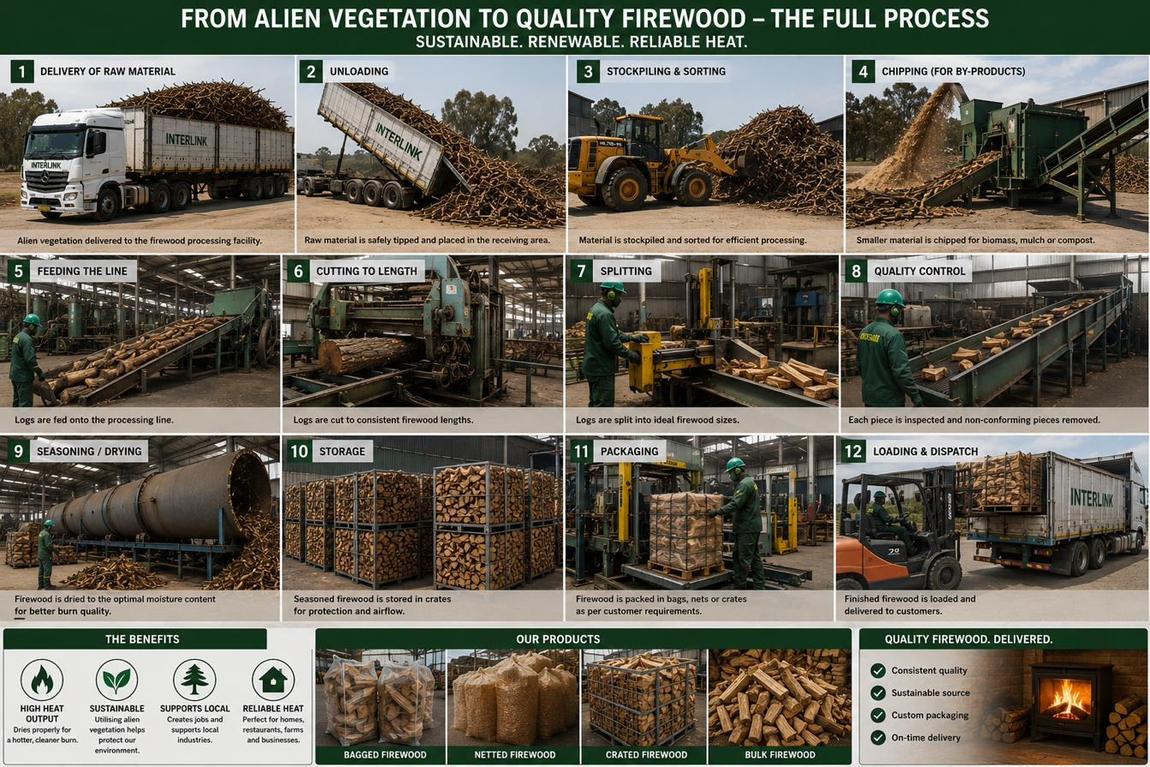 Open full size ↗
Delivery of raw material, unloading, stockpiling and sorting, chipping for by-products, feeding the line, cutting to length, splitting, quality control, seasoning and drying, storage, packaging, loading and dispatch.
Tap or click the image to open it full size
Who we supply
Firewood buyers on the board today
Firewood merchants
Bulk green billets and cordwood, collected or delivered, on standing monthly volumes.
Restaurants and pizzerias
Consistent seasoned hardwood with a moisture certificate — wood-fired ovens are unforgiving of wet fuel.
Lodges, farms and estates
Seasonal bulk deliveries into a woodshed ahead of winter, with a repeat slot booked for the following year.
Forecourts and retailers
Bagged seasoned wood for resale, with provenance you can put on the bag.
Firewood volume for the season?
Tell us your monthly tonnage and whether you want it green or seasoned. We will match it to the closest sites and hold the volume.
In the field
Photographs from our sites
Clearing invasive vegetation in the Western Cape is physical, technical and often vertical. These are Contour crews at work.
Images show material types and operational context. A photograph does not establish current stock; request the source and current condition of the parcel you intend to buy.
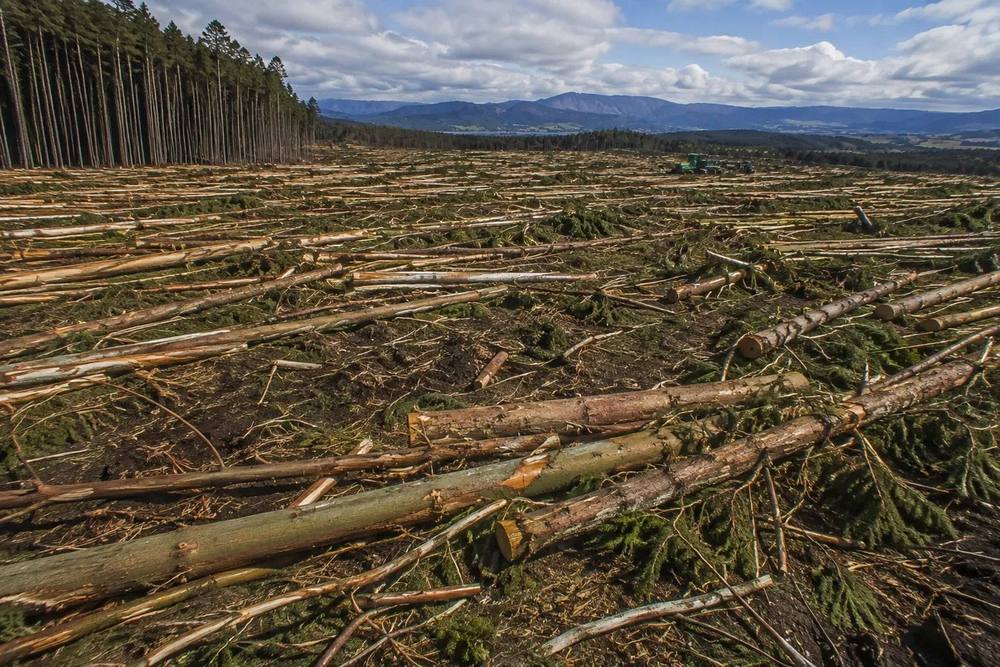 A block, felled
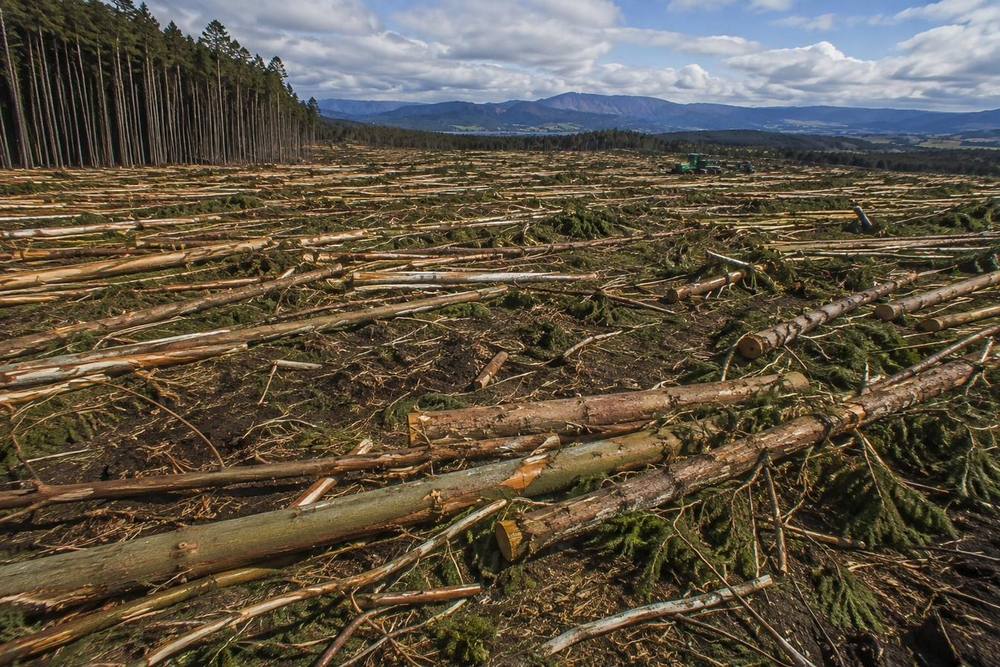
An invasive stand brought down across a Western Cape slope. Stems lie where they fell, waiting to be cross-cut, sorted and extracted to a landing.
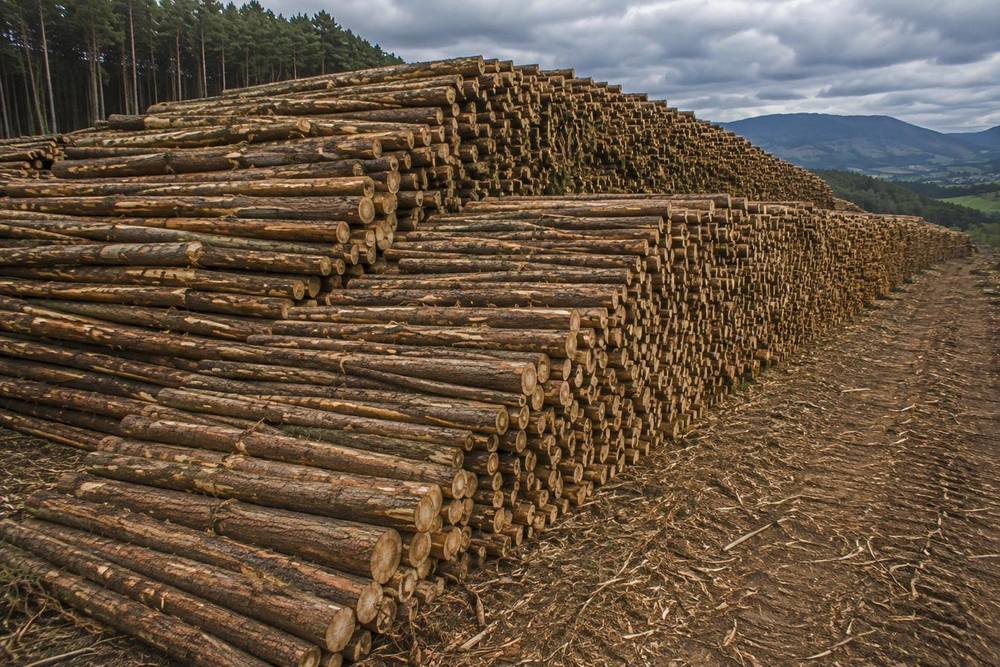 Stacked and sorted
Cross-cut round wood stacked in bulk at a landing. Sorting at this point — sawlog, pole, billet, cordwood — is where the value of a hectare is decided.
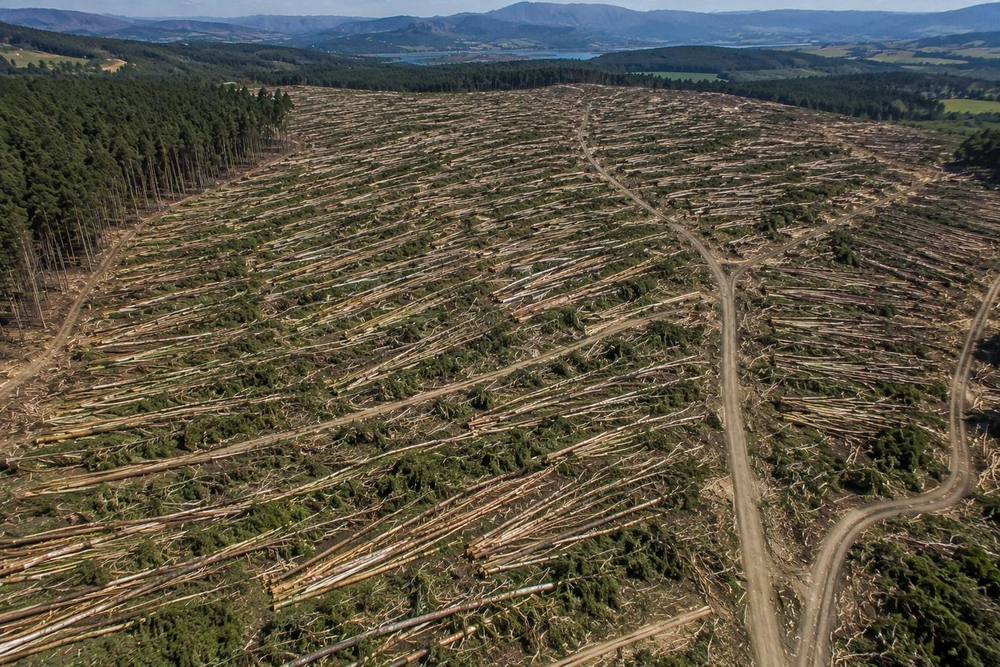 The scale of it
Felled stems lying in rows across a cleared block. Aerial assessment is used to verify treated area and plan extraction routes.
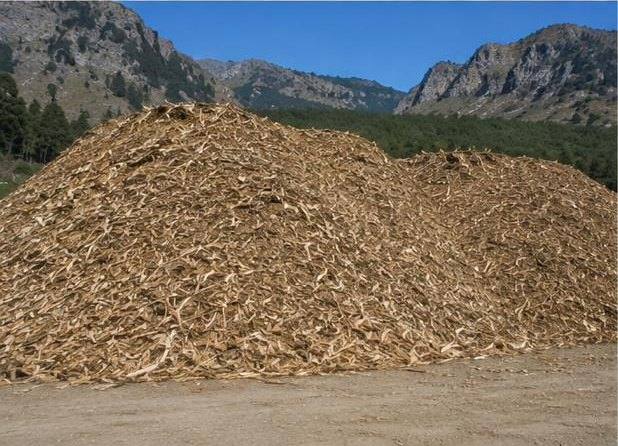 Chipped to grade
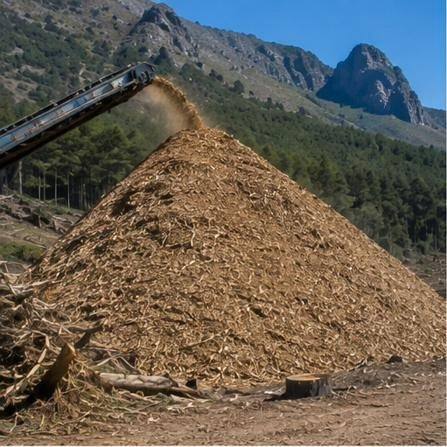
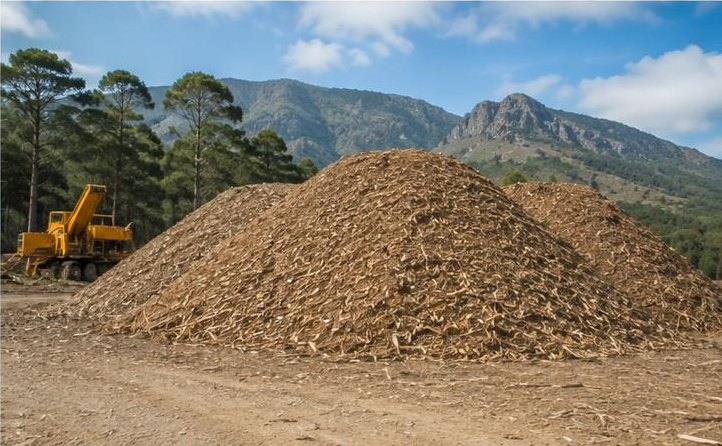
A woodchip stockpile at a Western Cape site. Fine, standard or coarse — screened to the particle size the buyer's process needs.
Chipping on siteBrash and small-diameter material fed straight through the chipper. Handling the material once instead of three times is where the saving is.
Loaded and awayMaterial loaded for delivery. Matching vehicle to road access is the single biggest lever on delivered cost.
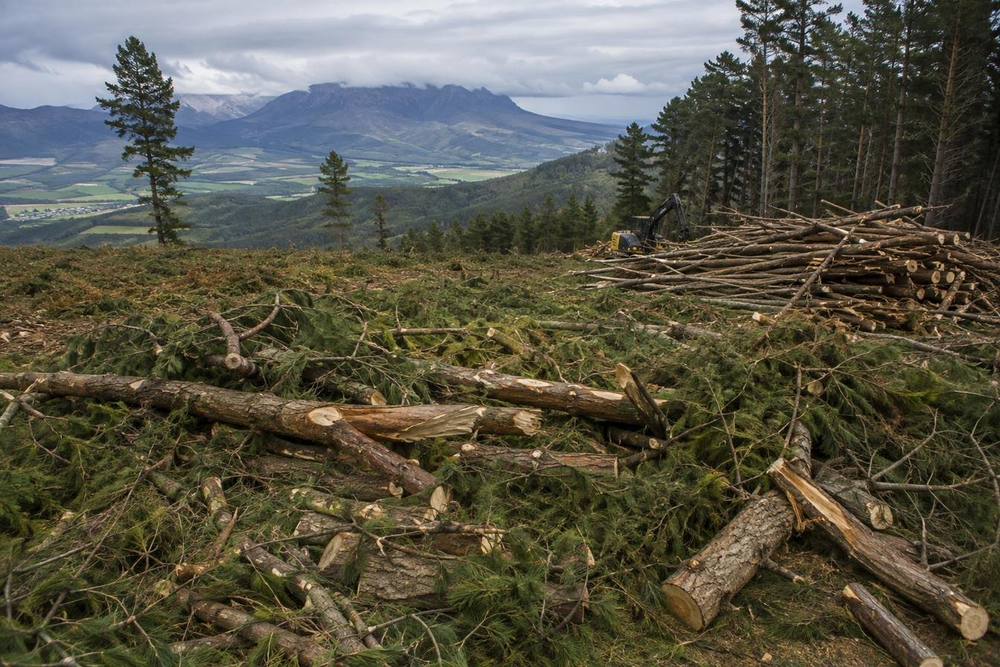 At the landing
Felled stems and a stacked pile beside the extraction route, positioned where a truck can reach them.
Verified from aboveField records and available spatial data support reporting for the agreed work.
Cut to lengthCross-cut ends at a landing. Length and diameter determine whether a stem becomes a sawlog, a pole or firewood.
Chip in bulkA stockpile beside the haul road, ready to load for mulch, bedding or boiler fuel.
Cleared groundThe slope after felling. Stumps are treated where required at the time of cutting so the stand does not simply coppice back.
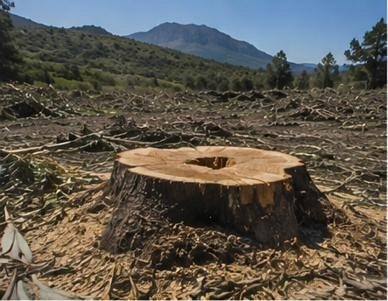 Treated at the cut
A treated stump. Cutting without treating produces a denser, multi-stemmed regrowth — worse than the original stand.
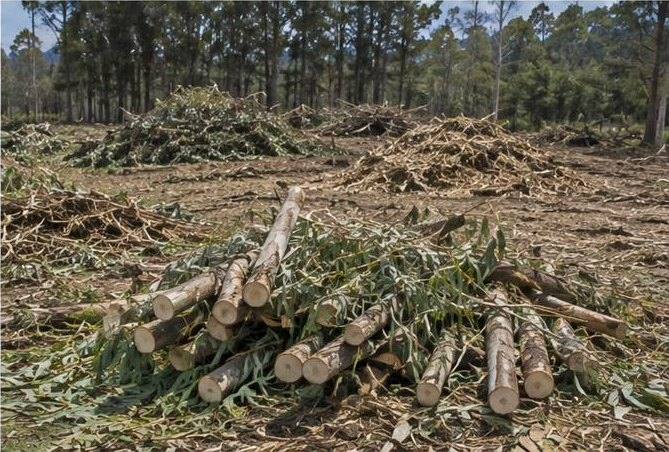 Nothing wasted
Brash and tops alongside cross-cut stems. Material with no round-wood market becomes chip or hog fuel rather than a burn pile.
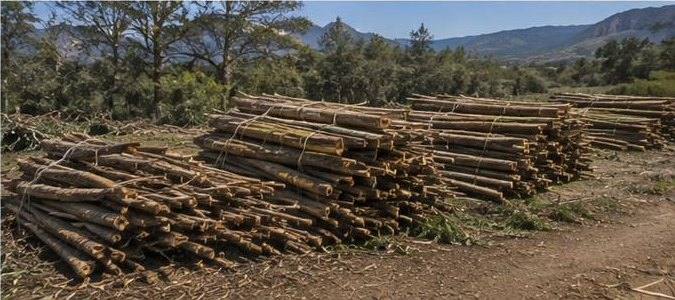 Poles and droppers
Straight material bundled for fencing, vineyards and structural use.
High-angle clearingRope technicians removing invasive pine from a steep catchment face — the terrain where invasion does the most damage to water supply, and where nothing else can reach.
Controlled fellingDirectional felling under supervision. Fall direction protects watercourses, indigenous vegetation and the crew working below.
The teamThe Contour Enviro Group team — field crews, trainers, project managers and technology staff across three divisions.
Field crewsA field team on site. Clearing is labour-intensive by nature, which is what makes it a genuine employment programme as well as an environmental one.
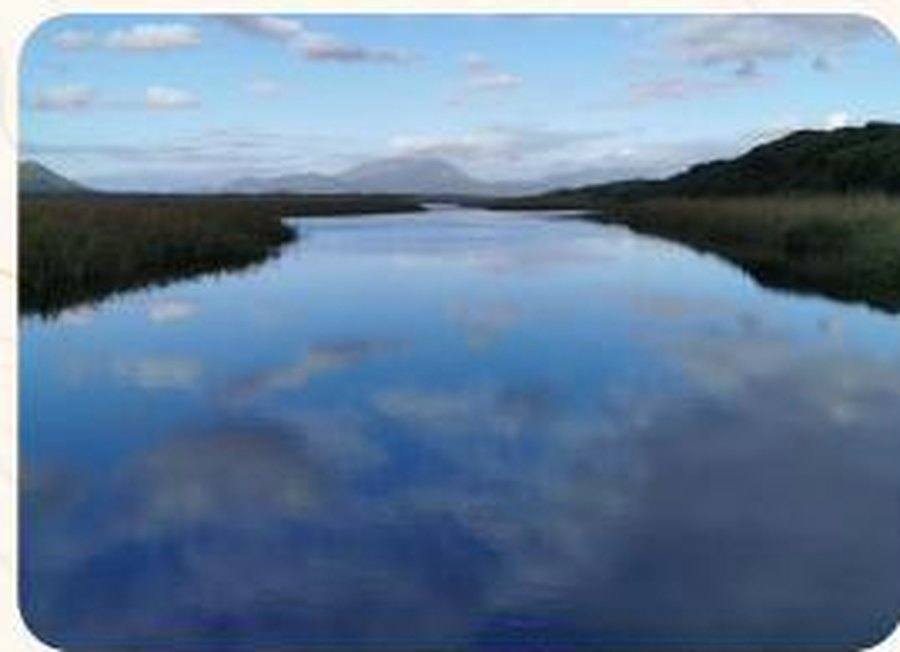 What it is for
A Western Cape wetland. Riparian zones are where invasion does the most hydrological damage — and where clearing returns water fastest.
 Contour Training Academy
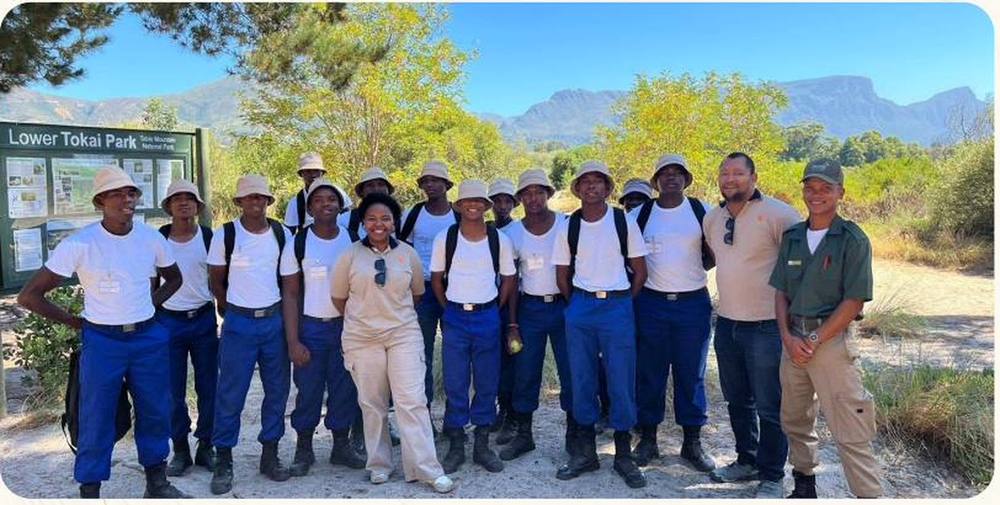
Graduates of the group's accredited programmes. Over 2 000 conservationists trained since 2018.
How the material moves
Illustrated
Blocks mapped and species recorded before anything is cut.
Chipped at the landing, straight into the trailer.
Round wood loaded for a mill or a merchant.
Cross-cut and sorted by end use.
Screened to grade and ready to load.
Coarse chip surfacing a farm track.
Come and see a site.
Site visits can be arranged for buyers taking contract volumes and for landowners considering a clearing programme.
Three effects
Direct, measurable, and modest — which is why we can stand behind them
Fuel leaves the slope
Material sold and hauled away is material that cannot burn. On a fire-prone Cape slope that is the most immediate benefit of the whole transaction, and it happens the day the truck leaves.
Clearing goes further
Revenue from biomass offsets part of the cost of the operation that produced it. The same budget clears more hectares — and hectares cleared are the only thing that returns water to a catchment.
Work stays local
Clearing, cross-cutting, chipping and haulage are labour-intensive and take place where the invasion is. The group supports over 400 jobs and work opportunities annually.
What buying biomass does not do is offset your emissions, restore a catchment by itself, or make burning wood carbon-free. Anyone telling you otherwise is selling something.
Catchment restoration
Evidence at the right scale
Published catchment research supports invasive vegetation management as part of water security. Outcomes depend on where clearing takes place, the species removed and ongoing follow-up.
Programme results belong to the organisations and partnerships that report them. They should not be treated as the impact of one supplier or one biomass purchase.
Read the 2019 Water Fund business case summary →Contour's own record
From the group company profile
Contour Training Academy graduates. Over 2 000 conservationists trained since 2018.
People, not just hectares
Clearing is labour-intensive by nature, and the group treats that as an opportunity rather than a cost. The Contour Training Academy delivers QCTO and SETA-accredited programmes in conservation, nature-based tourism and project management, and Youth for the Environment — a registered non-profit and public benefit organisation — has reached over 8 000 young learners with environmental education and bursary access.
Twenty-four green MSMEs have been supported through partner programmes. Several of them are in exactly the business this website is about: taking material off cleared land and turning it into something saleable.
Being straight about it
Three things we will not claim
- Not carbon neutral. Burning wood releases carbon. The argument for biomass here is fuel-load reduction, catchment restoration and substitution for coal or imported fuel — not neutrality.
- Not unlimited. Clearing is contract-driven and seasonal. We contract against a portfolio of sites and disclose the risk.
- Not a substitute for follow-up. Removing the biomass does nothing about the seed bank. Follow-up clearing is the work that decides whether a site stays clear.
What we will claim
The material was cleared under a legitimate invasive-species mandate. It is not indigenous. It is not plantation timber grown for the purpose. It came off a named site on a recorded date, and we can tell you which one.
That is a smaller claim than most biomass marketing makes. It has the advantage of being true.
Buy the material. Fund the work.
Every load that leaves a site is fuel removed and clearing paid for. That is the whole proposition.
Biomass for your business. Value from cleared land.
Source firewood, woodchips, round wood and biomass feedstock from invasive alien clearing in the Western Cape. Tell us what you need — we will confirm suitable material, collection options and delivery costs.
For buyers
Find the right feedstock
Specify a product, quantity and destination. We will check collection and delivery options.
Request a quote →For suppliers
Have biomass to sell?
Tell us the species, location, quantity and how the material is presented.
Offer your material →For landowners
Assess your invaded land
Explore a clearing plan and whether biomass recovery can offset part of the cost.
Discuss your property →Contact us for current availability.
Send your product, quantity and location to our team.
Request availability →Availability, specification and price are confirmed for each enquiry before an order is accepted. A listed estimate is not a stock reservation.
The material
Wood that was never meant to be here
Pines, gums, wattles, rooikrans and Port Jackson were introduced to the Cape for timber, shade, tannin and dune stabilisation. They escaped. Today they drink the catchments dry, feed catastrophic fires and crowd out fynbos found nowhere else on earth. Clearing them is not optional — and the wood that comes off has real value.
Wattles, pines and gums account for roughly seven in every ten litres lost to invasion nationally.
The problem and the product are the same thing
A dense hectare of invasion can hold well over a hundred tonnes of woody material. Historically it was stacked and burned on site, because moving it cost more than it earned.
Contour Biomass changes that arithmetic. Where recovery is commercially viable, biomass revenue helps cover extraction costs. Removing material reduces fuel on the site and supports the wider restoration programme.
- Sourced only from legally mandated invasive clearing — never indigenous forest
- Species, quantity and required quality checks confirmed for each supply arrangement
- Source and field records agreed for each project
The landscape we work in
Mountain catchments, river corridors and coastal plain
These are the slopes that supply the Western Cape with water. Pine, wattle and gum have spread across them for a century, drinking the runoff before it ever reaches a dam and building fuel loads that turn ordinary fire seasons into disasters.
Contour crews work these landscapes every day — on foot, with machines, and on ropes where nothing else will reach. Every hectare treated puts wood on the ground.
Two ways to take it
Collect it, or let us deliver it
Buy it where it lies
Purchase the standing or felled material on the site itself. Your team, your transport, your schedule. Lowest price per tonne — you carry the extraction.
How on-site buying works →
Delivered to your yard
We extract, process and deliver. Chipped to a grade you specify, or in the lengths it was cut — billets, cordwood, poles or full-length stems.
Delivery options and grades →
Cut, sorted, ready to load
This is what you are buying
On site · Western Cape
Round wood
Woodchip
Products
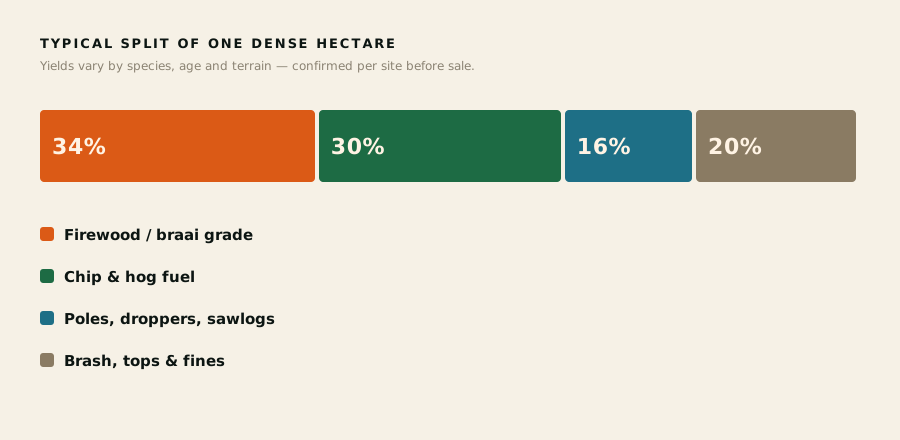
Four streams out of one hectare
Species, age and terrain decide the split. Every site is assessed before it is listed, so you know what is actually there before you commit a truck to it.
Firewood & braai wood
Rooikrans, black wattle and gum — the Cape's traditional braai and heating woods, seasoned or green.
Woodchips & mulch
Specify the chip size needed for your application; grade, suitability and processing availability are confirmed on enquiry.

Poles, droppers & sawlogs
Straight gum and pine selected out for fencing, structural poles, pallet stock and small mills.
Boiler & hog fuel
Consistent bulk feedstock for process heat, kilns, dryers and charcoal production.
How it works
From assessed site to collected load
The site is surveyed
Boundaries are mapped, species and density recorded, and an estimated tonnage published to the board.
You reserve a parcel
Tell us the tonnage and form you need. We confirm what is actually there and issue a firm price.
The material is cleared
Ground crews, mechanised teams or rope technicians, depending on the terrain. Species-appropriate stump treatment and follow-up address regrowth.
It is extracted and presented
Cut to length and stacked at a landing, or chipped on site straight into your trailer.
You collect, or we deliver
The agreed quantity record, source reference and any specified quality checks accompany the load.
Who buys it
The material already has a market
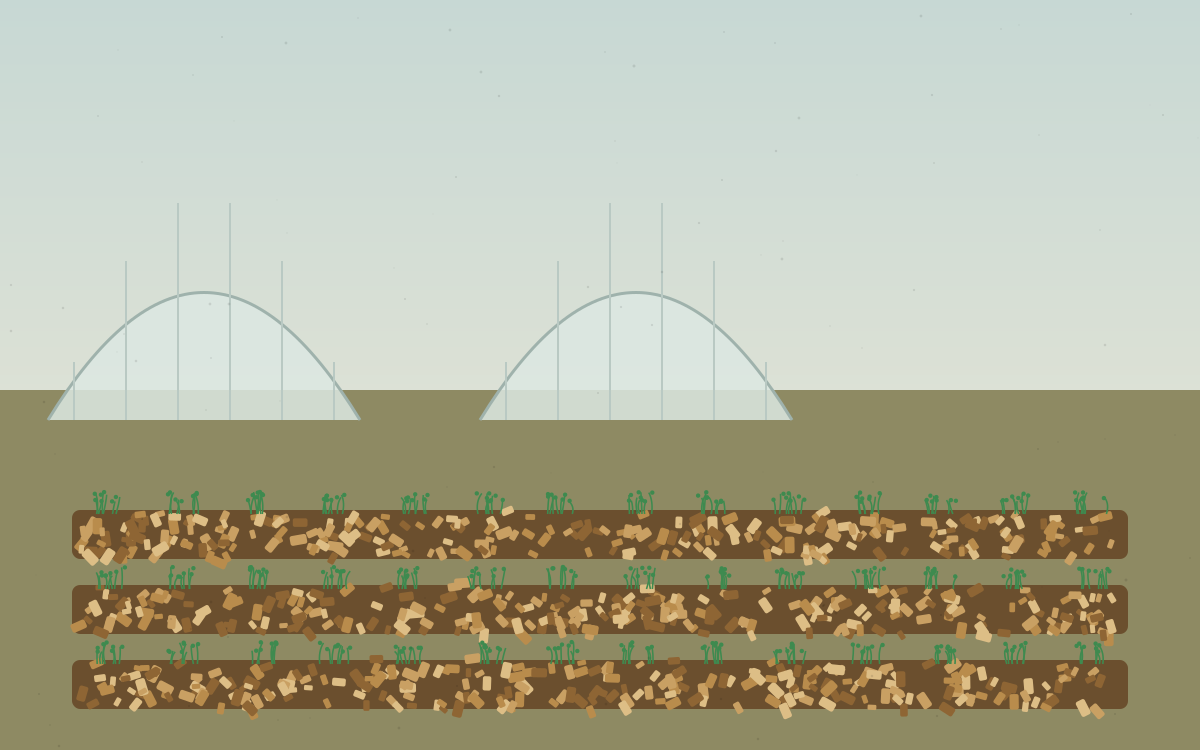
Farms & nurseries
Mulch that holds soil moisture, bedding for livestock and poultry, and chip surfacing for farm roads.
Heat & energy users
Boilers, brick and lime kilns, grain and fruit dryers, and charcoal producers running on solid fuel.
Mills & manufacturing
Sawmills, pole treaters, pallet makers, board plants and furniture workshops taking blackwood.
The Contour Enviro Group team. Contour Biomass is the group's biomass arm.
Who stands behind it
Backed by an established environmental group
Contour Biomass does not exist on its own. It sells the material produced by Contour Enviro Group's restoration teams — the same crews, safety systems and reporting used on catchment contracts across the Western Cape.
Tell us what you burn, chip or mill — we will tell you which site to take it from.
Send a specification and a monthly tonnage. We will match it to the sites closest to you and quote both collected and delivered.
Buyers
Who buys biomass
Cleared invasive vegetation is not a novelty product looking for a market. It replaces materials these industries already buy — usually cheaper, and always with a better story attached.
Farms, nurseries & landscaping
Mulch for orchards, vineyards and nursery beds. Bedding for livestock and poultry. Chip surfacing for farm roads, yards and paths.
Heat, energy & charcoal
Boilers, brick and lime kilns, grain and fruit dryers, and charcoal producers running on solid fuel.
Mills & manufacturing
Sawmills, pole treaters, pallet and crate makers, board plants, furniture workshops and woodturners.
Firewood merchants and retailers
The largest single buyer group. Green billets and cordwood bought in bulk, seasoned and split for resale into homes, restaurants and forecourts.
Restaurants, pizzerias and lodges
Consistent seasoned hardwood with a moisture figure. Wood-fired ovens and braai kitchens cannot run on wet fuel.
Landscapers and municipalities
Mulch and coarse chip for park beds, verges, playgrounds and erosion control on public open space.
Compost and growing-media producers
Fine chip and bark as a carbon source in compost blends and potting media.
Mushroom growers
Hardwood chip and sawdust as a substrate base, particularly for oyster and shiitake production.
Equestrian and animal facilities
Low-dust chip for stables, arenas, kennels and animal shelters, which composts afterwards.
The journeys
From a standing invader to the product you buy
Four end products, four supply chains. Each one starts on a cleared Western Cape slope and ends at a buyer’s gate. Open any of them full size to follow the process step by step.
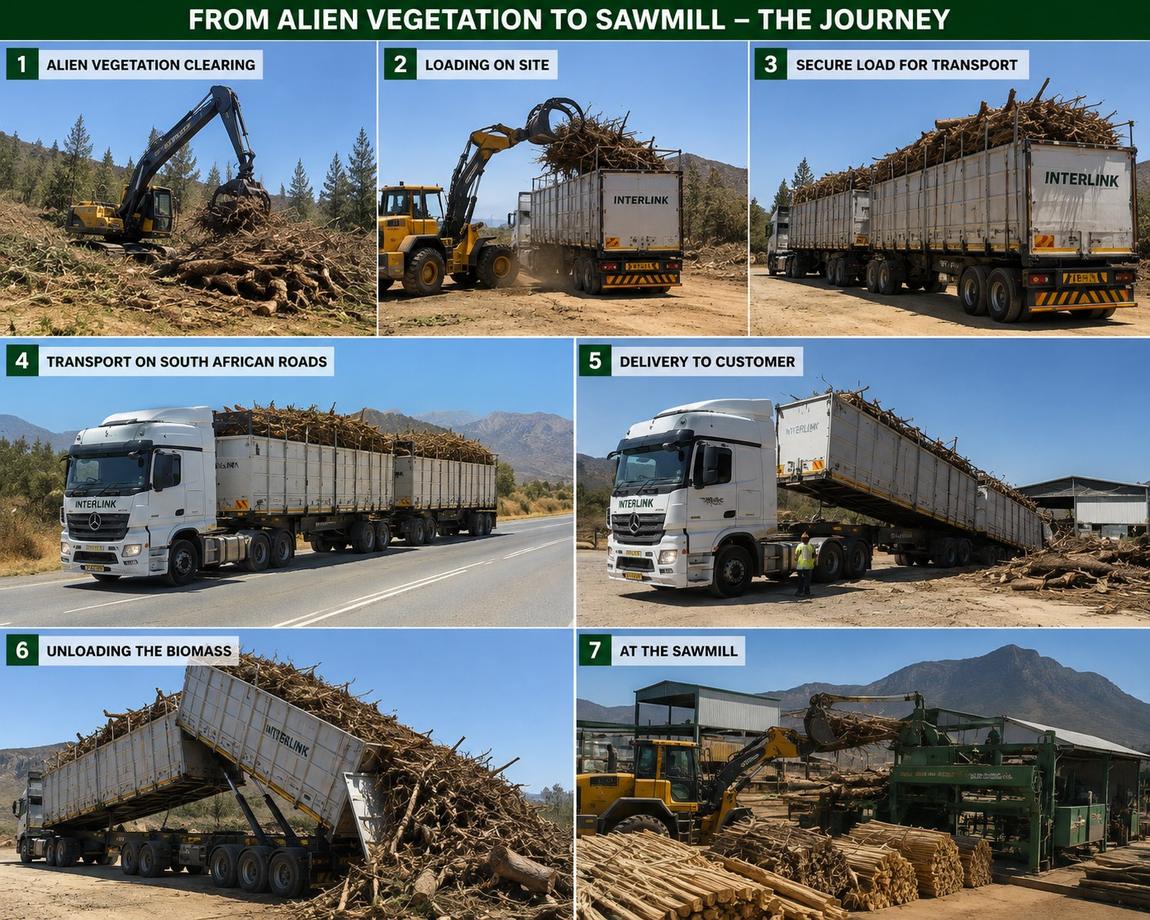
Alien vegetation to sawmill
Clearing, loading, securing the load, transport, delivery and offload at the mill.
Alien vegetation to quality firewood
Raw material through cutting, splitting, seasoning, quality control, packaging and dispatch.
Alien vegetation to premium charcoal
Delivery, chipping, size reduction, carbonisation, cooling, screening and packaging.
Wood chips to healthy soil
Chipping, delivery, unloading, spreading and mulching — and what it does to the soil over time.
Wood chips to healthy soil
The largest single market for cleared biomass is agriculture. This is the whole chain — from the chipper to the crop, and what the mulch layer does to a farm’s soil over the season that follows.
Open full size ↗Wood chips produced, delivered to the farm, unloaded on site, spread on the soil and acting as a natural mulch — with the benefits on farms, how farmers use chips around trees, in vegetable beds, in orchards and vineyards and under tunnels, results over time, and tips for best results.
Tap or click the image to open it full size
Why buyers switch
Four arguments that hold up in a boardroom
Cost
Solid biomass frequently lands below coal, LPG and imported alternatives on a rand-per-gigajoule basis — particularly where the buyer sits close to a clearing site.
Provenance
Every load carries a species declaration and a source site. For buyers with certification obligations, that is the difference between a claim and a record.
A genuine environmental case
This is material from mandated invasive clearing — not indigenous forest, not plantation grown for the purpose. Buying it removes fuel load and helps fund catchment restoration.
Local supply chain
Western Cape material, hauled by Western Cape trucks, cleared by crews working in the catchments that supply the province with water.
Your industry not listed?
If you burn, mulch, mill or compost anything, there is probably a grade that fits. Tell us what you use now.
For landowners
Clear your land. Share the value.
If you have invaded blocks on a farm, an estate or a reserve, the wood standing on them is worth something. It can pay for a meaningful share of the clearing.
Three arrangements
Pick the one that suits your cash flow
We clear, biomass offsets the cost
Contour clears to an agreed plan. The value of the recovered material is set against the clearing cost, so you pay the difference. Where volume and access are good, that difference can be small.
Best for dense, accessible blocks with real tonnage.
You clear, we buy the material
You already have a team and equipment. Cut, stack it at a landing we can reach, and sell it to us rather than burning it. We handle the market, the transport and the buyer.
Best for farms with existing capacity and time in the off-season.
You clear, you keep it
Keep the material for your own use — mulch for the orchards, chip for the farm roads, firewood for the house and the workers. We price the chipping or processing alone.
Best where the material is worth more to you than to the market.
How it starts
Four steps to a decision
An initial discussion
Share your location, estimated invaded area and access details. We agree the scope and any fee before arranging a site assessment.
Mapping and assessment
Blocks are mapped by species and density, with an estimated tonnage split by likely product. Field assessment and available spatial data inform the proposal.
A written proposal
Clearing method, staging, cost, biomass value and what you would pay net. Follow-up passes are priced in, not left as a surprise.
Work, in stages
Most properties are cleared over several seasons, starting with outliers and watercourses. Staging spreads the cost and protects the work already done.
Why do it now
Four reasons that are not about conservation
It only gets more expensive
Invasion thickens and spreads. A block that is a weekend of chainsaw work today becomes a machine contract in five years and a rope job in fifteen.
It is a legal duty
Listed invasive species must be controlled by the landowner, and must be disclosed when you sell. See the law →
Fire
An invaded block is a standing fuel bed. Reducing it is the one part of your fire exposure you actually control. See fire risk →
Water
Riparian invasion draws directly from the water table. Clearing can improve water availability; the response depends on the species, catchment conditions, treatment and follow-up.
Landowner questions
Asked on almost every farm
What size block is worth doing?
Will you take only the good wood and leave the rest?
What about my indigenous trees?
How much of the clearing cost can the biomass actually cover?
Do you handle the follow-up?
Start with your property and your goals.
Tell us where the property is and what you would like to achieve. We will discuss an assessment, agree any fee upfront and consider whether biomass recovery is practical.
How it works
Chipping & transport
Getting the material off the mountain is the hard part. Nearly every decision about price, grade and lead time comes back to extraction and haulage.
Chipping
On site, at a landing, or at a depot
Chipping at the landing, discharging straight into a trailer. Handling material once instead of three times is where the saving is.
Why chip at all
Round wood is mostly air once it is on a truck. Chipping converts an awkward, low-density load into a dense, flowable one, and turns branch material that has no other market into a saleable product.
Chipped on site — lowest handling cost, blown straight into the trailer, but the chipper has to reach the material and needs somewhere to stand.
Chipped at a landing — material is extracted first, then chipped on hard standing. Cleaner chip, less contamination, more handling.
Chipped at a depot — for screened grades and consistent specification, where the buyer needs a guaranteed particle size.
| Screen | Nominal | Typical use | Notes |
|---|---|---|---|
| Fine | 15 mm | Potting blends, fine paths, compost | Slowest throughput, highest cost per tonne |
| Standard | 30 mm | Mulch, bedding, boiler feed | Best balance of throughput and usability |
| Coarse | 50 mm | Roads, erosion control, hog fuel | Fastest and cheapest to produce |
| Unscreened | Mixed | Bulk hog fuel | Accepts fines and irregular pieces |
Extraction
Four ways material reaches a road
Tractor and trailer
The standard on farms and lowland sites. Cheap, flexible, and limited by ground conditions after rain.
Forwarder or loader
Where volume justifies a machine. Fastest route from stump to landing on mechanised sites.
Cable and winch
Steep ground where a machine cannot go but a line can. Slower, and hard on the material.
Specialist extraction
Some sites require specialist methods beyond routine road access. Feasibility, the service provider and cost must be confirmed before any such work is offered.
Extraction cost is why two sites with the same species can differ by several hundred rand a tonne. The site sheet on each listing tells you which mode applies.
Haulage
Load the right vehicle, once
| Vehicle | Payload | Suits | Needs at your gate |
|---|---|---|---|
| 6 m³ tipper | ≈ 4 t chip | Nurseries, smallholdings, urban delivery | A normal delivery bay |
| 18 m³ tipper | ≈ 8–11 t | Farms, landscapers, small boilers | Firm ground, room to tip |
| 90 m³ walking-floor | ≈ 28–32 t chip | Boilers, board plants, bulk mulch | Hard standing, turning circle, overhead clearance |
| Timber truck with crane | ≈ 28 t round wood | Sawmills, pole yards, merchants | Firm offload area beside the vehicle |
| Interlink flat-deck | ≈ 32 t | Long-haul round wood | Good approach road, forklift or crane |
Three things that waste money
- Under-loading. A vehicle that leaves half empty because the yard was soft costs the same to run as a full one.
- Waiting. Standing time is charged. Have the offload area clear and someone available when the truck arrives.
- Double handling. Tipping onto a hard stand and then moving it again with a loader adds cost to every tonne.
Round wood loaded at a landing. Matching vehicle to road is the single biggest lever on delivered cost.
Tell us what can reach your gate.
Vehicle size, offload arrangement and access constraints. We will price the cheapest way to get the material to you.
Who we supply
Six kinds of operation
Sawmills, fixed and mobile
Pine and gum sawlogs from clearing blocks. Expect taper, sweep and knots — priced accordingly, and entirely usable for many products.
Pole treatment plants
Straight gum in 1.8 to 6 m lengths for fencing, vineyard and structural poles.
Pallet and crate makers
Short pine logs and low-grade gum, where appearance does not matter and cost does.
Board and panel plants
Chip and residue in bulk, delivered by walking-floor trailer.
Furniture and craft workshops
Selected blackwood parcels — the same species sold internationally as Tasmanian blackwood.
Woodturners and instrument makers
Small, occasional parcels of interesting material. Ask to be added to the notification list.
The journey
Alien vegetation to sawmill, step by step
What happens between a standing invader on a Western Cape slope and a log on your deck.
Open full size ↗Clearing, loading on site, securing the load, transport on South African roads, delivery to the customer, offloading the biomass and arrival at the mill.
Tap or click the image to open it full size
Mill on site
Often the cheapest arrangement for both sides
Bringing a mobile mill to the landing removes a haulage leg from the equation. You cut what you want on site; we handle the residue as chip and the rest of the block as fuel.
- No haulage cost on material you were going to reject anyway
- You select stems yourself, at the landing
- Sawdust and slabwood stay with us as hog fuel
- Site induction, safety and access are arranged as for any collection buyer
- Works best on sites with a graded landing and good vehicle access
Log deck and mill. Round material from clearing is not plantation-grade, and is priced on that basis.
Residue in both directions
If you already mill, we will take your offcuts
Slabwood, offcuts, edgings and sawdust are a disposal cost for most small mills. They are hog fuel and mulch feedstock for us.
Where a mill is taking logs from us and generating residue, we can run both directions on the same vehicle — logs in, residue out — which usually makes both loads cheaper than either would be alone.
Supply agreements
Mills need certainty more than they need a low headline price. We write supply agreements against a named portfolio of sites, with a stated tonnage band and disclosed access risk, rather than an open-ended promise we cannot keep.
Tell us your log specification.
Species, minimum diameter, length and monthly volume. We will tell you which sites can hold it and for how long.
The build-up
Five lines, every time
Material value
What the wood itself is worth, set by species and end use. Rooikrans destined for braai wood carries a different value to hakea going to chip.
Extraction
Getting it from where it fell to a place a truck can reach. On a flat lowland site this is minor. On a high-angle catchment site it is the largest line on the invoice.
Processing
Cross-cutting, splitting, chipping, screening or seasoning — whatever converts the raw stem into the product you asked for.
Transport
Priced per loaded kilometre against the vehicle the road allows. Under-loading a truck because of a soft yard is the most common avoidable cost.
Verification
Agreed measurement, source records and any specified quality sampling. The measurement and documentation required are agreed before the load is priced.
Pricing on request
A written quote for your load
Send the product, approximate quantity and destination. We assess the material, processing and transport together so you can compare collection with delivery.
Your quotation will state the unit of sale, specification, VAT treatment, loading or offloading responsibilities, validity period and payment terms. Where stock is sold by volume, the quote will distinguish loose, stacked or solid cubic metres.
Start with three details
- Product or intended use
- Quantity — tonnes or cubic metres
- Collection point or delivery town
What moves your price down
Five things buyers control
- Take volume. A full walking-floor trailer lands cheaper per tonne than three tippers.
- Take it green. Seasoning costs money and yard space. If you can season it, do it yourself.
- Be flexible on species. Accepting a mixed load rather than a single species opens more sites.
- Fix a schedule. A standing monthly slot lets us plan trucks and drop the transport line.
- Make the offload easy. Hard standing and a clear turning circle means a bigger vehicle can come.
What moves it up
Rope-access and high-altitude extraction. Wet-season access on gravel. Screened, low-moisture chip to a tight specification. Small, irregular loads to awkward addresses. None of these are hidden — they are quoted as their own line so you can see what you are paying for.
If a requirement is pushing the price, we will say so and suggest the cheaper way to get the same result.
Terms
The commercial basics
| Item | Standard position |
|---|---|
| Unit of sale | Confirmed in the quotation: tonnes, clearly defined cubic metres, pieces or an agreed parcel. |
| Minimum order | Confirmed for the product, location, loading arrangements and available vehicle. |
| Payment | Deposit, payment timing and any account terms are agreed in the written quotation. |
| Reservation | Stock is reserved only after written acceptance by Contour on the agreed terms. |
| Moisture | Moisture condition, measurement basis and any acceptance limit are agreed before dispatch. |
| Force majeure | Weather, fire closures or access restrictions may affect delivery. Any change is communicated and handled under the accepted terms. |
Ask for a firm number.
Give us a product, a tonnage and a delivery address. You will have a priced offer against a named site.
Products
One hectare, four product streams
Invasive alien stands are mixed, uneven and full of forks and bends. Sorting at the landing is what turns that into products a buyer can actually use.
Firewood & braai wood
The Cape's braai culture runs on rooikrans and black wattle. Sold green for you to season, or seasoned and split.
Woodchips & mulch
Screened to 15, 30 or 50 mm. Moisture retention for orchards and nurseries, bedding for livestock, surfacing for farm roads.
Poles, droppers & sawlogs
Straight gum and pine pulled out at the landing for fencing, structures, pallet stock and small mills.
Boiler & hog fuel
Bulk solid fuel for process heat, kilns and dryers, with the moisture figure that lets you calculate your own delivered energy cost.
Indicative split of a dense hectare. Species and stand age move these proportions substantially — pine-dominated catchment sites yield far more sawlog than a coastal rooikrans block.
Matching species to product
What each invader is actually good for
| Species | Best use | Second use | Notes for buyers |
|---|---|---|---|
| Rooikrans (Acacia cyclops) | Braai wood | Charcoal | Dense, low ash, excellent coals — the Cape benchmark |
| Black wattle (Acacia mearnsii) | Firewood and heating | Charcoal, chip | High energy, roughly 18–20 MJ/kg dry, burns long |
| Port Jackson (Acacia saligna) | Chip and mulch | Kindling | Fast-growing, lighter wood; best value as volume |
| Bluegum (Eucalyptus spp.) | Poles and sawlogs | Firewood, chip | Straight and large; splits well, seasons slowly |
| Cluster pine (Pinus pinaster) | Sawlogs and pallet stock | Hog fuel | Clean, knot-free lower stems on catchment sites |
| Silky hakea (Hakea sericea) | Chip and hog fuel | Kindling | Fine-stemmed; chips easily, poor as cordwood |
| Blackwood (Acacia melanoxylon) | Furniture and craft timber | Firewood | Genuinely valuable timber — sold in small selected parcels |
Quality control
What we check before it leaves
Species separation
Loads are declared by species. Mixed loads are labelled as mixed — we do not sell a mixed load as single species.
Moisture
Sampled per load on request, with the reading on the ticket. It is the number that decides your usable energy.
Contamination
Soil, stone and metal are the enemy of any chipper, boiler or mill. Chip is produced off hard standing wherever possible.
Size consistency
Screen size is held across the load, not just at the start of the run. Screening is subject to available processing capacity and the agreed specification.
Not sure which stream fits your process?
Tell us what you are burning, mulching or milling today. We will tell you which species and grade replaces it, and what it will cost delivered.
Biomass listing
Contact our team to confirm current stock.
Request a quote
Tell us what you need
Buying material, offering biomass or planning a clearing project? Share a few details and prepare an enquiry for our team.
Want to look before you ask?
Check published listings or send us your requirement for confirmation.
Reason 05
What the law asks of landowners
Under the National Environmental Management: Biodiversity Act, controlling listed invasive species on your property is a legal duty — not a conservation preference.
The categories
Four listings, four sets of obligations
The Alien and Invasive Species Regulations under NEMBA (Act 10 of 2004) place listed species into categories. What you may do with a plant depends entirely on which category it falls into, and sometimes on where in the country you are.
| Category | What it means | Typical Cape examples |
|---|---|---|
| Category 1a | Must be combated or eradicated. May not be owned, imported, grown, moved, sold, given away or dumped in a waterway. Officials must be given access to monitor or assist. | Emerging invaders under active eradication |
| Category 1b | Major invaders that must be controlled as part of an invasive species control programme. Removal may need government assistance at scale. | Rooikrans, Port Jackson, silky hakea, wattle and pine outside plantations |
| Category 2 | Permitted in demarcated areas under permit — typically commercial plantations and woodlots. Outside those areas, treated as Category 1b. | Commercial pine and black wattle plantations |
| Category 3 | May remain where already established, but may not be propagated, sold or planted. In riparian zones and wetlands, Category 3 plants become Category 1b. | Certain ornamental and older amenity plantings |
This page is a plain-language summary to help you understand your position. It is not legal advice, and listings are updated from time to time. Confirm the current status of a species with the Department of Forestry, Fisheries and the Environment or CapeNature before you act.
What it means in practice
For anyone who owns or manages land
You must control listed species
The duty sits with the landowner. Not with the previous owner, not with the neighbour whose seed blew in, and not with the state.
Sellers must disclose
When property changes hands, the seller must notify the buyer of listed invasive species on the land. An untreated invasion is a disclosed liability.
A control plan matters
Regulators respond far better to a documented, progressing plan than to a single clearing event with no follow-up.
Early is cheaper
A young invasion is a weekend of work. The same block twenty years later is a rope-access contract. Nothing about this gets cheaper by waiting.
How Contour helps
Compliance, with the material paying part of the bill
- Survey and mapping of listed species on your property
- A staged control plan with follow-up scheduled, not assumed
- Clearing by trained crews, including high-angle terrain
- Stump treatment and regrowth control
- Records and reporting you can produce if you are asked
- Biomass sold or chipped back into your operation to offset the cost
The practical order of work
1. Map what you have, by species and density.
2. Deal with the outliers first — isolated plants and new arrivals are cheap to kill and expensive to ignore.
3. Work downstream to upstream along watercourses, or you will simply be reseeded from above.
4. Clear the dense core, and sell the biomass out of it.
5. Budget for follow-up passes for several years. This is the step everyone skips, and it is the one that decides whether the work lasts.
Common questions
The law and your land
Can I sell wood from Category 1b plants?
Do I need a permit to clear invasives on my own land?
What if my neighbour does nothing?
Is there government support?
Get a documented control plan.
A mapped assessment, a staged plan and a cost — set against what the biomass on your land is worth.
Services
What Contour Biomass does
We sit between a clearing operation and a buyer. That means survey and clearing on one side, processing, logistics and supply contracts on the other.
Biomass supply
Firewood, chip, round wood and boiler fuel from mandated invasive clearing sites across the Western Cape — collected or delivered.
See the products →
02Invasive vegetation clearing
Ground, mechanised and high-angle clearing with stump treatment and scheduled follow-up, delivered by Contour Enviro Group crews.
How we clear →
03On-site chipping
On-site chipping can be quoted with material left on site or hauled away. Required chip size and available processing equipment are confirmed before booking.
Chipping and transport →
04Site survey and mapping
Field assessment, species and density mapping, and indicative tonnage to inform a practical quotation.
For landowners →
05Contract supply
Recurring supply arrangements can be scoped for boilers, mills and merchants, subject to verified feedstock, capacity and agreed terms.
Contract supply →
06Compliance support
Control plans, records and reporting for landowners meeting their obligations under the invasive species regulations.
The legal position →
Behind the service
The wider group
Contour Biomass is one part of Contour Enviro Group. When a job needs more than biomass — a restoration contract, an accredited training programme, or environmental monitoring and reporting — it is delivered from within the same group.
Contour Green Solutions
Restoration, vegetation management and field operations — including high-angle access and protected-area operations.
Contour Training Academy
QCTO and SETA-accredited learning for conservation, nature-based tourism and project management. Over 2 000 conservationists trained since 2018.
Grasshopper Green Technologies
The environmental operating system linking projects, field telemetry, geospatial data and verification reporting.
Not sure which service you need?
Describe the problem — an invaded block, a fuel requirement, a compliance deadline — and we will tell you which part of the group solves it.
Primary references
Read the underlying evidence
Cape Town catchments
The Nature Conservancy’s 2019 business case summary explains the catchment analysis and modelled restoration benefits.
Open the summary PDF →National water impacts
Le Maitre and colleagues’ 2016 Water SA paper reports an estimated annual flow reduction of 1 444 million m³ and explains the study’s assumptions and limitations.
Read the research →Biomass recovery
RSB’s 2022 Alien Energy article discusses the estimated biomass potential and logistical constraints of recovering invasive plant material.
Read the RSB article →Species regulation
The 2020 regulations set out categories, restricted activities and permit procedures. Check the applicable species listing, exemptions and any subsequent amendments for a particular activity.
Open the regulations →Published studies are dated evidence. Planning densities, material yields and transport examples are indicative and must be checked for the actual product and site. Product availability and commercial terms are confirmed separately.
References
What we cite, and where the numbers come from
| Figure used on this site | Source |
|---|---|
| 55 billion litres a year lost to invasive alien plants in Cape Town's dam catchments; projected to roughly double within about two decades; 54 300 hectares identified across seven priority sub-catchments; up to R40 000 per hectare for initial control in dense, rugged, riparian terrain | Greater Cape Town Water Fund Business Case, The Nature Conservancy, 2019; City of Cape Town Water and Sanitation Directorate reporting |
| 1 444 million m³ per year national streamflow reduction (2.9% of naturalised mean annual runoff); wattles 34.0%, pines 19.3%, eucalypts 15.8%; condensed invaded area of 1.50 million ha | Le Maitre, D.C., Forsyth, G.G., Dzikiti, S. & Gush, M.B. (2016), ‘Estimates of the impacts of invasive alien plants on water flows in South Africa’, Water SA 42(4), 659–672 |
| National impact range of 1.44–2.44 billion m³ per year, rising to 2.59–3.15 billion m³ without control; riparian invasions have 1.2–2× the impact of dryland invasions | Le Maitre, D.C. et al. (2020), ‘Impacts of Invasive Alien Plants on Water Resources in South Africa’, in Biological Invasions in South Africa, Springer |
| 10.1 million hectares invaded to some degree (about 6.8% of South Africa) | Versfeld, D.B., Le Maitre, D.C. & Chapman, R.A. (1998); Le Maitre et al. (2000) |
| Working for Water has cleared about 2.5 million hectares since inception; approximately 9 000 plant species in the Cape Floristic Region with two-thirds endemic; about 2 000 threatened by invasives; over two-thirds of the Cape's protected areas invaded | University of Cape Town news and research summaries (2018), drawing on SANBI and CSIR research |
| 70% of Cape Floral Region plants found nowhere else on earth | The Nature Conservancy / Greater Cape Town Water Fund |
| Fuel traits, dry biomass and fuel structure as the strongest predictors of flammability in Cape vegetation | Kraaij, T., Msweli, S.T. & Potts, A.J. (2022), ‘Fuel trait effects on flammability of native and invasive alien shrubs in coastal fynbos and thicket’, PeerJ 10:e13765 |
| Invasive alien plants could supply approximately 11.3 million tonnes of solid biomass annually in South Africa; most biomass is currently left on site after clearing | Roundtable on Sustainable Biomaterials, ‘Alien Energy: unlocking the potential of invasive plants in South Africa’ (2022), drawing on CSIR work |
| 1 444 million m³ equivalent to irrigating about 120 000 ha of cropland, or supplying about 3.38 million households of four for a year | Sustainability Initiative of South Africa (SIZA) / Hortgro |
| Black wattle uses roughly four times the groundwater of indigenous trees; introduced to South Africa in 1871 | Ngarava, S. et al., reported in The Conversation Africa (2025) |
| Black wattle specific energy of approximately 18–19.7 MJ/kg with low ash content of about 1.5% | ICRAF and PROSEA species profiles; published combustion studies on Acacia mearnsii |
| NEMBA Categories 1a, 1b, 2 and 3 and landowner obligations | Alien and Invasive Species Regulations under the National Environmental Management: Biodiversity Act 10 of 2004 |
| Top invasive alien plants affecting the Western Cape | CapeNature, alien vegetation management guidance |
| 20 000+ hectares treated, 2 000+ conservationists trained, 400+ jobs supported annually, 8 000+ learners reached, ISO 9001:2015, B-BBEE Level 1, QCTO and SETA accreditation | Contour Enviro Group Company Profile, 2026 |
Where we use estimates
So you can tell the difference
Published research
- Water losses, nationally and in the Cape catchments
- Invaded area and rates of spread
- Fire behaviour and fuel-load research
- Biomass potential
- Species origins and introduction dates
Our own estimates and illustrations
- Commercial quotations, which depend on specification, site and load
- Product split from a dense hectare, which varies with species and stand age
- Bulk densities and volume conversions
- Stock estimates entered by Contour and confirmed before an order is accepted
- Educational graphics, which illustrate processes and are not site measurements
If you believe a figure on this site is out of date or wrongly attributed, tell us and we will correct it. Getting this right matters more to us than the marketing does.
Questions about the evidence?
We are happy to share the underlying reports and to put you in touch with the catchment programmes we work alongside.
Species guide
Know what you are buying
Six species make up the bulk of what comes off Western Cape clearing sites. Each burns, chips and mills differently — and each is on the board for a different reason.

Rooikrans
Acacia cyclops · from Western AustraliaHow it got here. Introduced from the 1830s to stabilise drifting coastal dunes.
Where you find it. Coastal dunes and sandy lowlands — West Coast, Cape Flats, Agulhas Plain, Overberg.
Why it has to go. Forms impenetrable coastal thickets, transforms dune systems and eliminates strandveld and coastal fynbos beneath it.
What it is good for. The Cape's benchmark braai wood. Dense, low ash, superb coals. Also excellent charcoal feedstock.

Black wattle
Acacia mearnsii · from South-eastern AustraliaHow it got here. Recorded in South Africa from 1871, grown for tannin bark, firewood, shade and shelter.
Where you find it. River banks, drainage lines, vleis and wetter lowlands throughout the province.
Why it has to go. The single largest contributor to national water loss from invasion — about 34% of streamflow reductions. Uses several times more groundwater than the indigenous vegetation it replaces, and banks enormous seed loads.
What it is good for. High-energy firewood and heating wood, roughly 18–20 MJ/kg dry with low ash. Excellent charcoal. Chips well.

Port Jackson
Acacia saligna · from Western AustraliaHow it got here. Introduced from the 1840s for dune stabilisation and tannin.
Where you find it. Sandy flats, disturbed veld, roadsides and lowland fynbos across the south-western Cape.
Why it has to go. Grows extremely fast, fixes nitrogen and enriches nutrient-poor soils that fynbos depends on, changing the site permanently.
What it is good for. Best value as volume: chip, mulch and hog fuel. Useful kindling. Lighter than rooikrans on a fire.

Cluster pine
Pinus pinaster · from Mediterranean EuropeHow it got here. Planted for timber from the 17th century onward; still the backbone of commercial forestry.
Where you find it. Mountain catchments and slopes — Boland, Hottentots Holland, Cederberg, Tsitsikamma.
Why it has to go. Light wind-borne seed travels far beyond plantations, so invasion spreads into rugged terrain that is expensive to reach. About 19% of national streamflow loss. Dense stands can add fuel and change fire behaviour; the outcome depends on conditions.
What it is good for. Clean, knot-free lower stems suit sawlogs and pallet stock. Tops and branches chip cleanly for hog fuel.

Bluegum
Eucalyptus spp. · from AustraliaHow it got here. Introduced for fast timber, windbreaks, mine props and bee forage.
Where you find it. River lines, farm boundaries, old woodlots and drainage courses province-wide.
Why it has to go. Deep-rooted and evergreen, drawing water year-round from river lines. About 16% of national streamflow loss.
What it is good for. The best pole and sawlog species from clearing work. Straight, large-diameter, burns hot. Splits far more easily green than dry.

Silky hakea
Hakea sericea · from Eastern AustraliaHow it got here. Planted as hedging and for firewood in the 1800s.
Where you find it. Mountain fynbos slopes, particularly in the Boland and Cape Peninsula ranges.
Why it has to go. Forms dense, spiny, near-impenetrable stands on mountain slopes, carrying heavy fuel loads and releasing seed en masse after fire.
What it is good for. Fine-stemmed and awkward as cordwood, but chips easily. Good hog fuel and kindling.
Also on the list
Other invaders you will meet in the Cape
CapeNature lists these among the invasive alien plants of greatest concern in the Western Cape.
| Species | Common name | Where it causes problems |
|---|---|---|
| Acacia melanoxylon | Blackwood | Forest margins and moist slopes — valuable furniture timber where stems are straight |
| Acacia longifolia | Long-leaved wattle | Lowland fynbos and disturbed veld |
| Paraserianthes lophantha | Stinkbean | Disturbed sites, roadsides, forest margins |
| Leptospermum laevigatum | Australian myrtle | Coastal dunes and sandy flats |
| Eucalyptus lehmannii | Spider gum | Coastal and lowland areas, especially the southern Cape |
| Prosopis spp. | Mesquite / suidwesdoring | Arid rangelands of the Northern and north-western Cape |
| Hakea gibbosa | Rock hakea | Mountain fynbos, alongside silky hakea |
Looking for a specific species?
Tell us which one and how much. We will point you at the sites carrying it, and tell you when the next block opens.
What comes out
Selected at the landing, not in the yard
| Product | Species | Typical size | Buyer |
|---|---|---|---|
| Fencing droppers | Gum, wattle | 1.2–1.8 m, 40–70 mm | Farms, game and stock fencing contractors |
| Fence and vineyard posts | Gum, pine | 1.8–2.4 m, 80–150 mm | Agriculture, vineyards, treatment plants |
| Structural and shade poles | Gum | 3–6 m, 120–200 mm | Sheds, shade structures, boma and lapa builders |
| Pallet and crate stock | Pine | Short logs, 200 mm+ | Pallet manufacturers, packaging |
| Sawlogs | Pine, gum | 2.4 m+, 250 mm+ | Small and mobile sawmills |
| Craft and furniture timber | Blackwood | Selected parcels | Furniture makers, woodturners, luthiers |
Round material from clearing sites is not plantation-grade. Expect taper, sweep and knots. Priced accordingly — and for fencing, shade structures and pallets, entirely fit for purpose.
Round material stacked at a landing, sorted by diameter before it is loaded.
Worth knowing
Blackwood is the exception
Acacia melanoxylon is a listed invader in the Cape and a genuinely fine cabinet timber everywhere else — the same species Australia markets as Tasmanian blackwood.
When a clearing block turns up straight blackwood of usable diameter, we do not chip it. It is cross-cut, stacked separately and offered as small selected parcels to furniture makers, turners and instrument builders who know exactly what it is worth.
Parcels are irregular and infrequent. If you work with it, ask to be put on the notification list and we will contact you when a block comes up.
For mills
What we can commit to
Mobile and small fixed mills are natural partners for clearing work — the log is already on the ground and the alternative is fuel value.
Log supply agreements
Committed monthly volumes off named sites, with diameter and species specification agreed up front.
Mill on site
Bring a mobile mill to the landing. You cut what you want, we handle the residue as chip. Often the cheapest route for both parties.
Residue offtake
If you already mill, your slabwood and offcuts are our hog fuel. We can run both directions on one vehicle.
Need round wood in volume?
Send diameter, length and monthly quantity. We will tell you which sites can hold that specification and for how long.
Track record
Who we have worked with
Contour Enviro Group has been in operation since 2017. In that time the group has delivered training, environmental and conservation projects across the Western Cape — for conservation authorities, government departments, NGOs, foundations and private landowners.
Our track record
Who we have worked with
Contour Enviro Group has been in operation since 2017. In that time the group has delivered training, environmental and conservation projects for conservation authorities, government departments, NGOs, foundations and private landowners across the Western Cape.
Client list as published on the Contour Enviro Group track record page. Engagements vary by programme and period.
In their words
What clients have said
Contour Enviro Group provided a professional service to the department in terms of environmental education. Their content is relevant and remarkable for the children that are taking part. They have been doing excellent work and I will recommend them as a reliable and responsible company that exceeds expectations in rendering their services.
Grant Jepthas — Overberg District Manager, Western Cape Department of Agriculture, LandCare
We have been very fortunate to receive training of high quality. We are particularly impressed by their professionalism, approach to work, and delivery of agreed terms.
SANParks
We contracted some of our work to Contour Enviro Group in 2020 and we never experienced any difficulty. The work was completed within the allocated time, and we were impressed with the quality. They have a great team that can plan properly and communicate effectively.
Thandeka Mayiji-Rafu — Likhona Lethu Services
Their performance has been good and I would recommend them for similar type work.
Mike du Toit — owner, The Valley Farms
Testimonials as published by Contour Enviro Group. See the full track record ↗
Work with the same group.
The crews, safety systems and reporting behind every load of biomass are the ones these organisations have contracted since 2017.
Reason 01
The water it takes
In a province that came within weeks of turning off its taps, the largest single avoidable water loss is a tree that was never supposed to be here.
The water case, illustrated
How alien vegetation steals our water
Open full size ↗The water loss process from rainfall to shortage, how much is wasted, water use comparison by species, the impact on our lives, and what can be done about it.
Tap or click the image to open it full size
The headline number
The water case for clearing
The Greater Cape Town Water Fund business case links invasive vegetation management to water security. Its 2019 summary provides a historical estimate of water losses and models the benefits of restoring priority catchments. These figures describe that assessment, rather than current measured stock or a guaranteed result for an individual property.
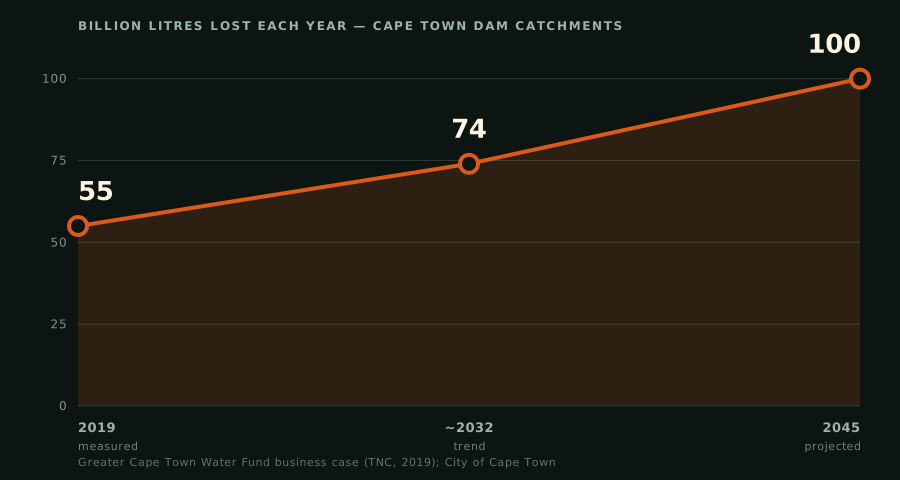
Without intervention, the loss is projected to roughly double within about two decades as invasions thicken and spread.
Catchment restoration
Evidence at the right scale
Published catchment research supports invasive vegetation management as part of water security. Outcomes depend on where clearing takes place, the species removed and ongoing follow-up.
Programme results belong to the organisations and partnerships that report them. They should not be treated as the impact of one supplier or one biomass purchase.
Read the 2019 Water Fund business case summary →Nationally
The same story, at country scale
| Measure | Figure | Source |
|---|---|---|
| Streamflow lost to invasive alien plants each year | 1 444 million m³ — about 2.9% of naturalised mean annual runoff | Le Maitre, Forsyth, Dzikiti & Gush, Water SA 42(4), 2016 |
| Range across later assessments | 1.44–2.44 billion m³ per year | Le Maitre et al. (2020) |
| Projected without control | 2.59–3.15 billion m³ per year — roughly 50% higher | Le Maitre et al. (2020) |
| Share of loss caused by wattles | 34.0% | Le Maitre et al. (2016) |
| Share caused by pines | 19.3% | Le Maitre et al. (2016) |
| Share caused by eucalypts | 15.8% | Le Maitre et al. (2016) |
| Equivalent irrigation water | Enough to irrigate roughly 120 000 hectares of cropland | SIZA / Hortgro |
| Equivalent household supply | Enough for about 3.38 million households of four for a year | SIZA / Hortgro |
| Most affected primary catchments | Western Cape, Eastern Cape and KwaZulu-Natal (over 5% MAR reduction) | Le Maitre et al. (2020) |
Why they use so much more
Three mechanisms
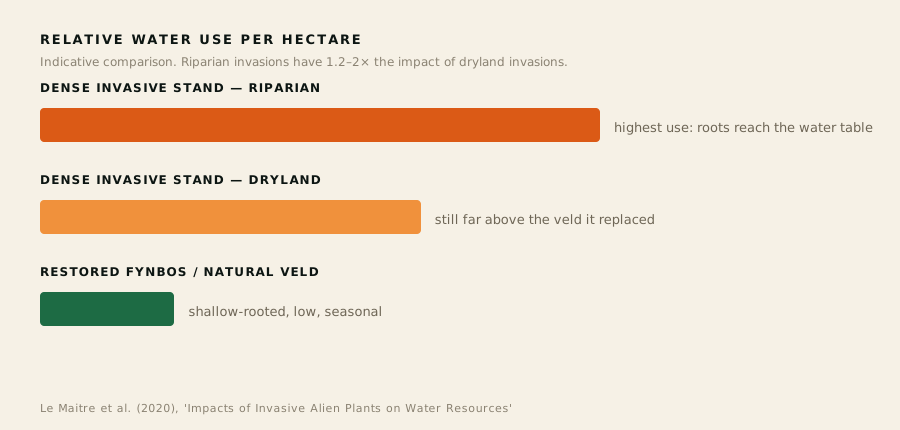
They are simply bigger
Fynbos is a low shrubland. Replace it with a closed canopy of 20-metre pines and you have multiplied the leaf area transpiring water into the air over every square metre of ground.
They root deeper
Riparian invaders reach the water table directly. Le Maitre and colleagues found riparian and groundwater-accessing invasions have 1.2 to 2 times the impact of dryland invasions.
They never stop
Fynbos slows down in the dry summer. Evergreen invaders with deep roots keep transpiring right through it — exactly when the catchment can least afford it.
Why it bites hardest in a drought
The losses do not scale down
In a wet year, a catchment can carry the loss. In a drought, riparian invaders still have access to the water table and keep drawing at close to full rate, while the runoff that would have reached the dam collapses. Proportionally, the damage is worst exactly when water matters most.
The Western Cape learned this in 2017 and 2018. Dam levels fell below 20%, "Day Zero" entered the vocabulary, and more than 30 000 jobs were lost in the agricultural sector alone during the drought.
Clearing does not make it rain. It stops a share of what does fall from being drunk before it reaches a dam, and that share is large enough to matter at city scale.
A Western Cape wetland. Riparian zones are where invasion does the most hydrological damage — and where clearing returns water the fastest.
The material coming out of these catchments is for sale.
Every tonne bought helps pay for the clearing that puts water back into the system.
Grades
Three screen sizes cover almost everything
| Grade | Nominal size | Bulk density, green | Used for |
|---|---|---|---|
| Fine | 15 mm | ≈ 350 kg/m³ | Potting and compost blends, seedling beds, fine paths |
| Standard | 30 mm | ≈ 320 kg/m³ | Orchard and vineyard floors, nursery mulch, animal bedding, boiler feed |
| Coarse | 50 mm | ≈ 290 kg/m³ | Farm roads, erosion control, hog fuel, landscape mulch |
| Hog fuel | Unscreened | ≈ 280 kg/m³ | Bulk energy where size consistency does not matter |
Densities are indicative and green. Seasoned chip is lighter for the same volume — which matters when you are paying by mass and stockpiling by area.
What the chip does
Four jobs it does well
Mulched beds under nursery tunnels — chip holds soil moisture and suppresses weeds without a herbicide pass.
Moisture retention
A chip layer between 50 and 100 mm deep cuts evaporation from the soil surface substantially, moderates soil temperature and suppresses weed germination. In a water-scarce province supplied by catchments that invasive trees are draining, that symmetry is not lost on our customers.
Weed suppression
Deep enough mulch blocks the light annual weeds need to establish, cutting herbicide passes and hand-weeding hours in orchards, vineyards and nursery beds.
Surfacing
Coarse chip over a compacted base makes a serviceable low-traffic farm road, yard surface or walkway that drains, does not turn to dust, and can simply be topped up.
Bedding
Absorbent, low-dust bedding for poultry houses, stables and kraals, which then composts into a soil amendment rather than a disposal problem.
Use it correctly
Three things worth knowing
Wood chip is not compost. Used properly it is excellent; used carelessly it will cost you a season.
Nitrogen draw-down
Fresh chip worked into soil pulls nitrogen as it decomposes. Laid on top as a surface mulch, the effect is minimal. Keep it on the surface, or compost it first.
Keep it off the stems
Piling mulch against trunks and stems holds moisture where you do not want it and invites collar rot. Leave a clear collar around every plant.
Seed and regrowth
Chip from seeding acacias can carry viable seed. For sensitive sites, ask for material chipped outside the seeding window or composted at temperature.
Ordering
How chip is bought
| Question | Answer |
|---|---|
| Minimum order | Minimum load confirmed for the product, route and available vehicle |
| Sold by | Unit and measurement method agreed in the quotation; volume conversions are indicative |
| Chipped to order or from stock | Both. Sites listed as chipped on site on the board can move in days |
| Offload requirement | Tipper needs a clear drop area; walking-floor needs hard standing and turning space |
| Storage | Chip heats as it composts. Keep piles under 4 m and turn long-term stockpiles |
How many tonnes of chip do you go through in a season?
Give us the annual volume and the grade. A standing delivery slot is cheaper per tonne than ordering load by load.